Where in the World is Amelia Earhart? By Jasmine Gordon

Archived in the category: General Info
Posted by Joyce Rhyne on 23 Feb 12 - 0 Comments

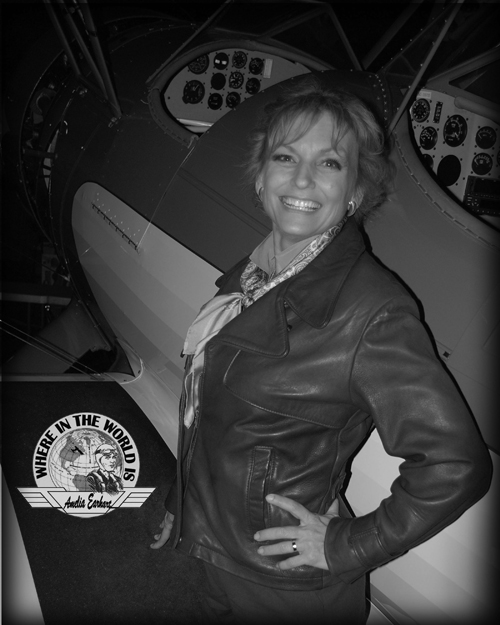
Amelia Earthart, played by Dianna Taylor Stanger has been found ladies and gentlemen! Can you guess Where in the World Amelia Earhart Is?

The night was upon us and as I neared Calhoun County Airport, I was greeted by a beautiful sunset signaling the beginning of a fantastic evening. Even though I had witnessed the “making” and been behind-the-scenes, as I walked into the hangar, the finished product absolutely took my breath away. It was difficult to imagine that hours before we were surrounded by storm clouds, hail, winds up to 25mph and worry.

As guests arrived at the 2012 Our Lady of the Gulf Catholic School Gala, they were presented with their boarding pass and escorted to their plane (table). All of the planes were appropriate to the time period beginning with: Amelia Earhart’s Lockheed Vega 5B, Lockheed L-10 Electra/Flying Laboratory, Lockheed L-1049/Super Constellation, Lockheed 5-C Vega/ Winnie Mae, Spirit of St. Louis, Douglas World Cruiser, Douglas DC-3, Wright Flyer, Bell X-1, Hughes H-1 Racer, Hughes H-4 Hercules, better known as the Spruce Goose, B-17 Flying Fortress or Memphis Belle, Consolidated B-24 Liberator, P-38 Lightning, P-51D Mustang, otherwise called the Glamorous Glenn III, Sikorsky S-42 dubbed the Pan-Am Clipper III and Martin 140 China Clipper.

The evening began with our host, Gustave Reuche (GR), played by Mark Daigle, welcoming all to Prime Time Live, America’s #1 Television Show, which brings viewers in-depth coverage of important events. His goal was to interview people and track down Amelia Earhart.

The 39 year-old icon was considered a world famous aviator, risk taker and public relations machine. Many thought she flew around the world for publicity.

Earhart was no stranger to completing challenges; she set the woman’s altitude record of 14,000 feet in 1922. In 1930, she set a woman’s speed record of 181 miles per hour; in 1931, she set an autogiro altitude record of 18,451 feet; in 1932 she was the first woman to fly solo across the Atlantic Ocean and accomplished many other great feats. On this particular evening we were gathered for her most famous challenge: she wanted to be the first woman to fly around the world.

On June 1, 1937 she and navigator, Fred Noonan took flight from Oakland, California, flew 5 continents and 20,000 miles of which 2,556 miles were over open ocean. On July 2, she radioed in to the US Coast Guard at Itasca about 200 miles from Howland Island. Earhart asked for them to take bearing on her signal. However she could not hear their response. At that point the pilots were on their own and her voice was last heard via radio at 8:45 am. It’s unknown if the plane sank quickly or slowly descended onto the ocean floor. One researcher stated, “Why would she not have been screaming, ‘SOS!’?” Perhaps she planned fly to a nearby island?

Throughout the years there have been a multitude of plausible theories. Some think she and Noonan fell into the hands of the Japanese. Others think they died as castaways and that the plane crashed 300 miles from where originally estimated. Did she come back under an alias? Was it a massive government cover-up? The US Navy presumed she ran out of gas before reaching Howland Island and closed the case. Maybe they were down to a few hours of gas, not mere minutes.

The most unique aspect of the event was the location and ambiance; the hangar glowed, echoed enthusiastic chatter and pronounced unanimous excitement. Everyone was abuzz, quickly visualizing strategies to figure how to pinpoint the exact location in which Amelia would be found. Friends united, imagining and contemplating where she could be.

You see, a prize was to be awarded to the guest that chose the correct location of Amelia Earhart whereabouts on a world map. The map was been divided into 245 sections was projected at the front of the hangar. The location was kept top secret, and everyone was yearning to identify the exact location. The situation was incredibly thought out and exquisitely executed.

Calhoun County Airport manager, Dianna Stanger commented, “The Our Lady of the Gulf 2012 Gala was one of the most entertaining evenings I have had the pleasure of participating in. The evening was fun, well organized and greatly benefited the school; the people that made it possible should be congratulated for the outstanding contribution they made.”

The night continued and GR interviewed an aeronautical engineer, US Navy Lieutenant, a house wife and a redneck. All of whom claimed to know Earhart’s whereabouts. Finally, at long last, Amelia’s biggest fan, played by Veva Saylor, took the stage. “Amelia is found in the hearts of all people who dream of taking to the skies and knowing the freedom of flight!” she said. And suddenly the heroine, played by Dianna Stanger appeared. The crowd cheered, sitting on the edge of their seats waiting to hear what had occurred on that morning flight over the Pacific Ocean. As she told her story, everyone was eager to find out her final destination, and then she gave her coordinates… and the passenger that chose #174 — Robert Flemming was the lucky winner!

Well folks, you missed quite a flight! I had a blast at last year’s gala, which was themed, A Night on the Titanic; this year’s gala was fantastic and I cannot wait to find out what next year’s theme will be! On behalf of Our Lady of the Gulf Catholic School and Calhoun Air Center, thank you to all that were involved, volunteered and attended. Good day!

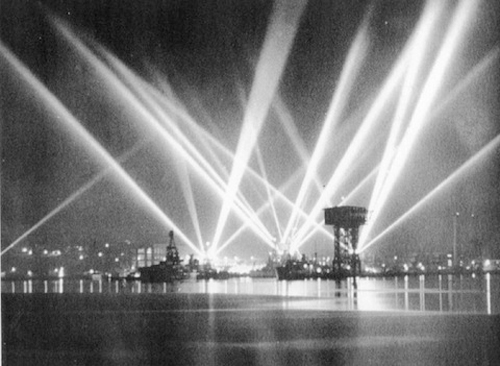
Picture taken from Los Angeles Harbor in the early morning hours of February 25, 1942, showing anti-aircraft spotlights searching the sky during the "Great Los Angeles Air Raid" which turned out to be a false alarm.

When most people think of World War II they are reminded of places such as Normandy, Pearl Harbor, Germany, Okinawa, or other places far from the continental United States. But some of the attacks on the United States occurred right here in our own backyard.

World War II, or the Second World War, took place from 1939 to 1945 involving a majority of the world’s nations, including the United States. The United States entered World War II when war with Japan was declared on December 8, 1941 the day after the Japanese attacked the U.S. Naval Base at Pearl Harbor in Hawaii. Three days later on December 11, 1941, Germany declared war on the United States. Both Germany and Japan wanted to bring the war to our shores.

In January of 1942 the German Navy launched “Operation Drumbeat”. This operation involved the sending of U-Boats to attack shipping off of the East Coast of the United States. (U-Boat was the German designation for a full size submarine) The United States, having no experience of a modern naval war close to its own shores, did not employ blackouts, or any increased naval patrols. The U-boats simply waited and picked off ship after ship in broad daylight, and at night as the ships were silhouetted against the lights of the major cities. Sometimes the U-Boats attacked on the surface, using their deck guns to save torpedoes, people on shore sometimes witnessed these attacks firsthand.

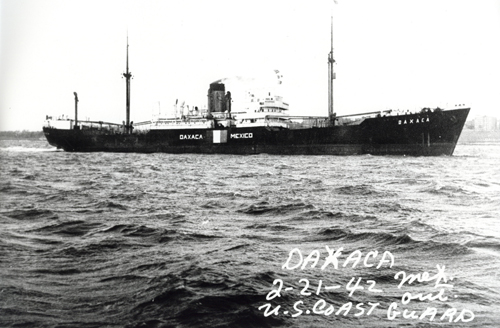
Some of the U-Boats destined for the United States, had orders to enter the Caribbean and Gulf of Mexico where fifty-six ships would be sunk with an additional fourteen ships damaged. U-507 shocked U.S. authorities by torpedoing and sinking the gasoline tanker Virginia in the mouth of the Mississippi River on May 12, 1942 with the loss of twenty-six sailors. Another one of the ships sank in the Gulf of Mexico was the freighter Oaxaca, which was torpedoed and sank eleven miles from Port O’Connor by U-171 on July 26, 1942.
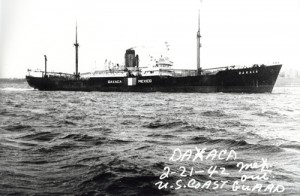
Freighter Oaxaca, which was torpedoed and sank eleven miles from Port O’Connor by German Submarine U-171 on July 26, 1942. Picture courtesy of Henry Wolff Jr.

The U-boats did more than attack ships: in June of 1942, U-202 surfaced off of Long Island, New York and dropped off four spies with explosives. That same month U-584 also dropped off four spies near Jacksonville, Florida. All eight of the spies were later captured by the FBI before they were able to carry out their intended plan of sabotaging power plants and blowing up aluminum production facilities. Six of the eight spies were sentenced to death and the other two were given prison sentences, both were released in 1948. The Germans tried to land more spies in November of 1944 when U-1230 dropped off two spies near Hancock Point, Maine. Their mission was to infiltrate the Manhattan Project, which was the U.S. Project to develop the first nuclear bomb. Both of the spies were captured and sentenced to death; however both sentences were commuted to life imprisonment, one was released in 1955, the other in 1960.

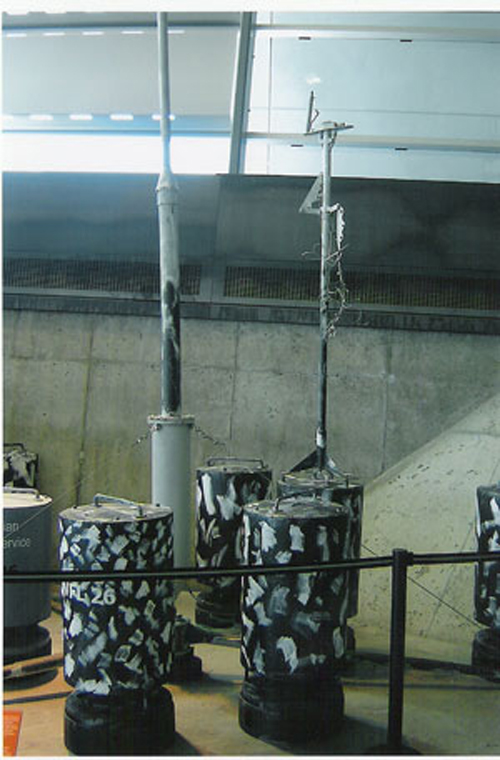
In September of 1943, U-537 set-up an unmanned automatic weather station north of Maine in Newfoundland. The weather station only worked for a couple of days and remained undetected after the war. The weather station was a secret known only to a handful of German sailors and scientists. The story became known in the late 1970’s, when an engineer with Siemens named Franz Selinger decided to write a history of the German Weather Service after his retirement. During his research, he found information about the weather station and contacted authorities to see if it had ever been found. Canadian and U.S. Authorities had no record of a German weather station being found on the East Coast. After a search the weather station was finally found in 1981 mostly intact; it is now on display at the Canadian War Museum in Ottawa, Ontario.
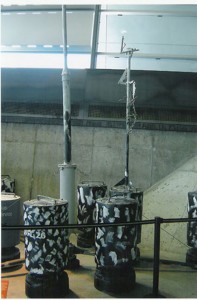
German automatic weather station which was installed in Newfoundland during World War II and found in 1981, on display at the Canadian War Museum in Ottawa, Ontario. Picture courtesy of the Canadian War Museum.

The Japanese were more ambitious than the Germans regarding attacks on the mainland United States. After the December 7, 1941 attack on Pearl Harbor, Several Japanese I-Boats were sent to the West Coast of the United States. (I-Boat was the Japanese designation for a full size submarine) Around 7:00pm on the night of February 23, 1942, Japanese Submarine I-17 surfaced near Santa Barbara, California. Using his 5.5 inch diameter deck gun, Captain Kozo Nishino fired at the oil storage facilities of the Ellwood oil field. Firing around 25 rounds, he then withdrew, later radioing Japan that he had “left Santa Barbara in flames”. Actually only a catwalk, some pumping equipment, and a derrick were slightly damaged. News of the attack triggered a panic along the U.S. West Coast.

This incident was the first direct attack by an enemy on the continental United States since the War of 1812.

Japanese forces invaded the Alaskan Islands of Attu and Kiska on June 3, 1942 and held them for almost a year. U.S. and Canadian forces fought the Japanese in several land and sea battles in miserable cold wet conditions. Eventually the Japanese abandoned Kiska, but Japanese troops on Attu held out until May 29, 1943 when they were defeated after mounting the largest banzai charge (suicide attack) of World War II. The charge, led by Colonel Yamasaki, penetrated far enough into U.S. positions to encounter shocked rear support units. After brutal hand-to-hand combat, the Japanese troops were killed almost to the last man, with only 28 surviving out of the almost 3,000 who participated in the charge.
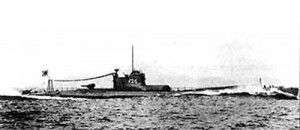
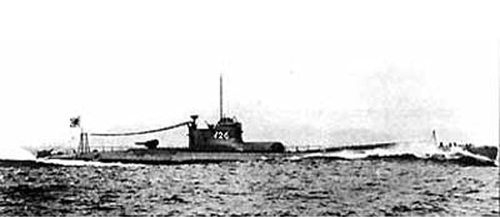
Japanese Submarine I-25 which shelled Fort Stevens and launched the airplane that bombed the continental United States twice in 1942. Picture courtesy of www.combinedfleet.com

On the evening of June 21, 1942, Japanese Submarine I-25 surfaced near Fort Stevens, Oregon. Fort Stevens was a U.S. Military Base that guarded the mouth of the Columbia River, which was important as cargo ships for the war effort were being built at facilities along the river at the time. Using his deck gun, I-25’s Captain Tagami Meiji fired around 30 rounds at the base before disappearing beneath the waves. The only damage was the baseball field backstop, and some power and telephone lines.

I-25 returned to the United States in September 1942 with the mission of using its floatplane to drop incendiary bombs on forests with the intent of starting large forest fires. I-25 carried a small floatplane with its wings folded back in a special watertight hanger on the deck. Pilot Nubuo Fujita was specifically chosen for the bombing missions. On September 9, the submarine crew deployed the floatplane which dropped two bombs near Brookings, Oregon. This attack by an enemy airplane was the first time that the continental United States was ever bombed by an enemy aircraft during wartime. Light winds, wet weather conditions, and two quick-acting Forest Service Fire Lookouts kept the fires under control. The floatplane launched again in the early morning hours of September 29 and dropped two more bombs near Port Orford, Oregon. While the plane was seen to drop its bombs, firefighting crews from a nearby Forest Service Ranger Station were unable to locate any evidence of the two incendiary bombs. The floatplane was again recovered by I-25, but Captain Meiji decided not to risk a third flight with the remaining incendiary bombs. I-25 went on to sink two U.S. cargo ships and the Russian Submarine L-16 off of the U.S. West Coast before returning to Japan. A U.S. sailor who was onboard the L-16 as a liaison officer during its voyage to Russia, was killed along with the rest of the L-16’s crew. I-25 would be sunk less than a year later by the destroyer USS Paterson on August 25, 1943.
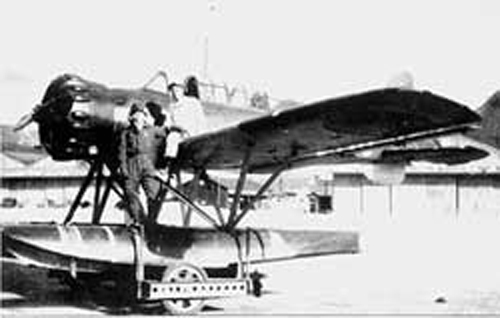
Japanese Pilot Nobuo Fujita posing in front of I-25's airplane, which he used in the two bombing raids on the United States.

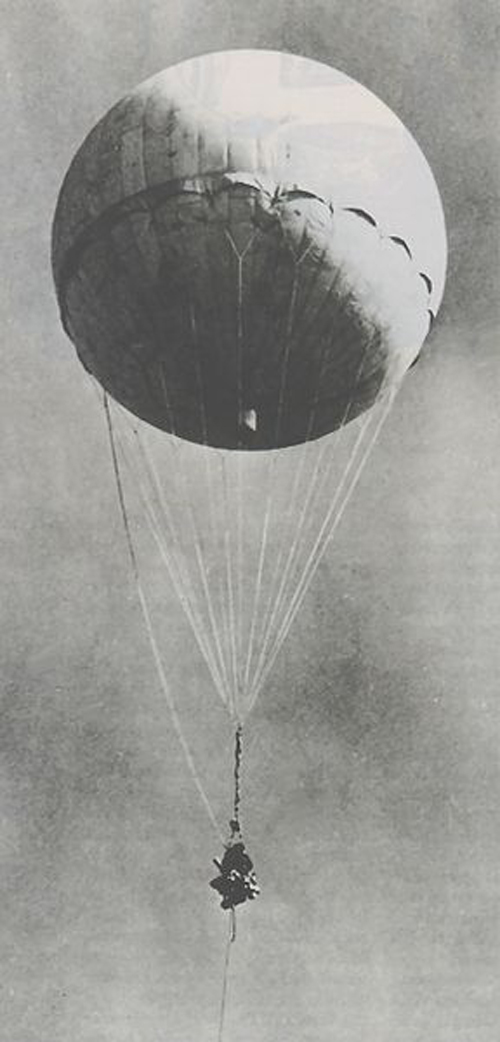
Between November 1944 and April 1945, the Japanese launched thousands of “fire balloons” toward North America. A Japanese fire balloon consisted of a large balloon filled with hydrogen carrying either a 26-pound incendiary bomb or a 33-pound anti-personnel bomb. Four smaller 11-pound incendiary devices were attached as well. Designed to make use of the Pacific Jet Stream, a crude timer was supposed to release the bombs and explode the balloon three days after launch, when the balloon was expected to be over the United States. But the timer often failed and intact balloons with their dangerous cargo were often found on the ground. A few hundred fire balloons were reported as reaching North America, but little damage was caused. U.S. Authorities instituted a “press blackout” on any reported Japanese balloons as they did not want the Japanese to know that some of the balloons were actually making it to the United States. A pregnant pastor’s wife and five children of their Sunday school class on a field trip became the only deaths. The children found a balloon on the ground and one of the children tampered with one of the bombs and it exploded, this happened near Bly, Oregon. The remains of fire balloons continued to be found in remote areas long after the war ended, the last reported finding of one was in 1978.
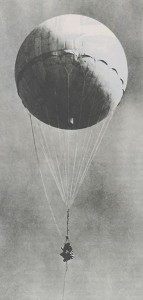
Picture of a Japanese fire balloon

During the War, many false alerts and enemy sightings were reported along the West Coast, the most famous of these happened the night after the Ellwood oil field attack by the Japanese Submarine I-17. Early on the morning of February 25, 1942; Japanese airplanes were supposedly sighted and air raid sirens were set off in Los Angeles County. At 3:16am U.S. Coastal Artillery began firing anti-aircraft shells into the air at reported aircraft; over 1,400 shells would eventually be fired. The anti-aircraft fire continued until 4:14am when the “all clear” was finally sounded. In addition to several buildings damaged, three civilians were also killed by falling shells, and another three died of heart attacks attributed to the stress of the hour-long firing. Within hours of the end of the air raid, U.S. Authorities held a press conference, saying the entire incident was a false alarm due to anxiety and “war nerves”. The incident was front-page news across the United States and is referred to in history as the “Battle of Los Angeles” or the “Great Los Angeles Air Raid”. The comedy war movie “1941” which was released in 1979 and directed by Steven Spielberg is loosely based on this incident and the Ellwood oil field shelling.

World War II ended with Germany’s surrender on May 8, 1945 and Japan’s surrender on August 15, 1945. Pilot Nubuo Fujita, who had bombed the United States using the I-25’s floatplane, managed to survive the war. In 1962 Fujita was invited to Brookings Oregon, near where he had dropped his first bombs. He gave the City of Brookings his family’s 400-year-old samurai sword in friendship where it is still on display at the library. Ashamed of his actions during the war, he was surprised when the town treated him with respect and affection, although his visit still raised some controversy around the United States. He passed away on September 30, 1997, at the age of 85. In 1998, his daughter, Yoriko Asakura, buried some of Fujita’s ashes at the Brookings bombing site.
Churchgoing By Erny McDonough

Archived in the category: Featured Writers, General Info
Posted by Joyce Rhyne on 23 Feb 12 - 0 Comments

No one can fault me for writing about my assignment here in Port O’Connor. I came here just over 17 years ago to help six people begin a church, and we have been steadily ever since trying to build a stable congregation in this community we love.

Now the history of churchgoing is not all flowers – it has quite a lot of thorns. Reformer John Calvin had three men arrested for laughing during one of his Geneva, Switzerland services. Puritans passed a law making December 25 an official workday and fined several people five shillings for frolicking that was deemed to be related to Christmas. In the Church of England, women had to either stand or bring their own seats. They usually brought stools. Puritans required their sermons to be at least two hours long and any preacher who was “short-winded” was considered a slacker. At New Haven Colony, the only excuse for nonattendance was illness and violators could be fined or whipped. The church organ was more controversial than drums have ever been. Our hymns were the Christian rock songs of their era.

Today we have made room for many variations in churchgoing. Churches of senior citizens always look different from churches that are predominantly made up of young people. Cowboy churches and biker ministries have distinctions that separate them, as do various other interest groups and ethnic groups. But genuine churches have certain non-negotiables that every attendee should expect.

When we go to church, we should expect to hear God’s Word. The Bible is life’s guide! Unfortunately, in some congregations, the Bible is being squeezed out, little by little. In its place are a surfeit of movie clips, skits, and other salutes to the culture. It is not wrong to use various means to illustrate a Biblical message. Illustrated sermons can be powerful. But it is a problem when time spent on illustrations greatly exceeds the ministry of the Word. Some postmodern-oriented groups no longer direct attendees to Scriptural references, focusing more on simply moral stories.

While some are cutting back on the use of the Bible in many free nations, Christians continue to risk their lives to own and read this Book in restricted lands. Read some of the materials published by “The Voice of the Martyrs” (www.persecution.com) and the Bible will take on a whole new value!

We should go to church to hear from God. If all we want is a recitation of today’s news or an individual’s personal opinion, there is no need for the pulpit. Those who listen to preachers have the right to expect to hear something from God that is relevant to their life. John Calvin said, “It is certain that if we come to church we should not hear only a mortal man speaking, but we shall feel that God is speaking to our souls, that He is the teacher. God calls us to Him as if He had His mouth open and we saw Him there in person.” When the Word of God is opened, there should be evidence that the speaker has been in God’s presence and has a word from the throne room.

When we attend church, we should expect to have no punches pulled and no stones thrown. If one finds a church with a pastor who is a compelling speaker, always lifting you up and making you feel better about yourself, yet never challenging you or mentioning sin, you have found a church with a serious problem. Churches must do what they can to reach the culture, but we are in a day when accommodation has become more likely than judgementalism. Both are wrong. Someone has said, “It is not the business of the church to adapt Christ to men, but men to Christ.”

Church services should make the attendees desire to participate in the life of Christ outside its four walls. I am firmly convinced that we praise God with lips and we worship God with our lives. Therefore, church services should help us praise God.

Church should use several different things to encourage praise. The music must be excellent, but never showy of talent! Musicians must be both gifted and godly or they do not qualify for services. The style of music should be what will cause the attendees to want to participate. Having studied and led music for many years, I believe simpler and easily followed melodies with steady beats are best to cause people to want to be a part. More complicated musical scores should be reserved for choirs, who have spent much time in practice. Hearts should be lifted and voices raised in church services.

There should be a time for an offering – an opportunity for us to give of our living to expand the ministry of the Lord through His church. There should be a time for corporate and private prayer. There should be opportunity for fellowshipping with fellow churchgoers.

But, most importantly, I believe that those who attend church should be inspired to live out their faith the other six days of each week. We should want to leave a service and find someone to help in the area that we have learned about that morning. We should find a new cause to deliver the love of Jesus Christ – that is true worship! We should be inspired to live as Christian gentlemen and ladies, whatever our age. We should take Christ with us into every situation in which we find ourselves.


Grand Opening of Saltwater Lodge

Archived in the category: Fishing Reports
Posted by Joyce Rhyne on 23 Feb 12 - 0 Comments

On February 5, 2012, Saltwater Lodge opened its doors — and brought a new hotspot to the Texas Gulf Coast. This 14-acre property features a main lodge with a spacious great room and complete commercial kitchen; two well-stocked individual cabins; ample top-of-the-line boats and equipment; and most importantly, the best fishing and waterfowl hunting this region has to offer.

Saltwater Lodge is a specialty bay-fishing and waterfowl outfitter located in the Seadrift/Port O’Connor area. The one-of-a-kind excursions are carefully planned by experienced professional guides abundantly familiar with the ins and outs of the terrain. For the guest seeking outstanding outdoor action, that’s great news.

But the benefits don’t end there. In an area where cozy accommodations are somewhat limited, Saltwater Lodge offers a new and very welcome alternative. You can settle into a comfortable cabin with three bedrooms, kitchen, sitting area and outdoor covered deck. And what’s more, they didn’t skimp on the beds: they use only the best mattresses and bedding so you get quality rest to prepare you for the day’s activities. “I’ve been fishing in this area for many years now, and I’ve always loved it. I wanted to make a comfortable place for people to go and play on the coast,” said Steve Rhyne, Saltwater Lodge owner.

Additionally, guests may request their dining preferences when booking their stay. Anything from man-sized portions of down-home cooking to gourmet specialties, all featuring the best meats and freshest seafood, will be expertly prepared and served. Start your day with a great breakfast at the lodge, and expect to find a satisfying lunch ready for you to enjoy after embarking on your hunting/fishing trip.

As it turns out, these folk know more than great hunting and fishing, they know how to throw a party. Their Grand Opening event, held Super Bowl weekend, was attended by a fun mix of outdoor enthusiasts and community residents, plus a special guest appearance by Miss Texas USA Brittany Booker. Good food, catered by Port O’Connor’s Smokin’ Nuts award-winning barbecue team, and great company marked this tremendous occasion in Texas Gulf Coast history. Rhyne expressed his appreciation that many distinguished locals were there to show their interest and support. Among them were Del Weathersby of First National Bank, Russell Pagel of The Sanctuary, Realtor Bill Tigrett, Action Welding’s Don Haynes, Rev. Erny McDonough, and Building Inspector/Custom Rod Maker Donnie Klesel.

When it comes to your ultimate weekend trip, Saltwater Lodge has packages that get you just what you’re after. The fishing trips are fully guided and include one night’s lodging, all meals, and fish cleaning and packaging. The hunting package gives you two opportunities to stake out the marshes of Port O’Connor with a guide who knows the area like the back of his hand. Then there’s the best of both worlds: the Cast and Blast. Head out to fish for reds, trout and flounder in the morning, then spend your afternoon duck hunting in the Texas Gulf Coast prime country. Relax in between outings in the great room or in your fully equipped cabin. No hurry, no stress. It’s life as it should be.

Although they’ve only recently opened, Saltwater Lodge is already working on added benefits for their clients. Soon you will be able to practice for your upcoming hunt at their sporting clay range on the grounds.

So if you’re ready to pack your bags and head to Saltwater Lodge, you’re not alone. You can contact Manager Scott Weiler to make reservations, but you better hurry because spots are filling quickly. “There’s been a great deal of interest in us simply because we offer so many benefits in one place. Not many around here can say the same. We’re the best-kept secret on the Coast right now, but this is only the beginning,” Weiler said during the Grand Opening celebration. With amenities like these, he’s probably right.

To make your reservation at Saltwater Lodge, call 361 785 3825.

Port O’Connor Fishing Report By Capt. Bob Hill

Archived in the category: Fishing Reports
Posted by Joyce Rhyne on 23 Feb 12 - 0 Comments

It seems that Mother Nature just doesn’t want to give up on winter. It hasn’t been all that cold but the wind just keeps blowing from the north. And rain! Its finally raining again, no complaints there. Of course the north wind means that the tides are low and getting to the fish is just that much more difficult. This is actually pretty much the norm for this time of the year but I don’t think I have to like it.

The lakes were getting good but I haven’t been able to get around back there lately. I know there are some real quality fish back there. About all you can do with this low water is fish the bay side of the drains and cuts coming out of the lakes or hike back in to the lakes and wade. Reds are pretty good on the shorelines of the bays. The tides will be back soon and you can expect a real improvement for trout fishermen. The San Antonio Bay reefs are still producing trout but most are small.

The jetties are full of reds and sheepshead, quite a few small drum are in the mix as well. Look for some big trout to show up out there soon.

Capt. Bob Hill

Port O’Connor Charters

(361) 983-4325

www.fishportoconnor.com


Untitled Document