Port O’Connor Fishing Report by Capt. Bob Hill

Archived in the category: Fishing Reports
Posted by Joyce Rhyne on 09 Feb 12 - 0 Comments

The last few weeks have seen some dramatic improvements for fishermen. Water temps have been around 60 degrees between fronts and the wind between the fronts has been Southeast. The tides have been a lot higher except for the day or two following the North winds. What we’ve seen during this period is a real uptick in the trout fishing.

Areas of mud and grass, like the lakes, have been giving up limits for waders and drifters as well. Most have been using dark colored soft plastics. Plum/chartreuse and blue/chartreuse have been popular. A lot of the drift fishermen are fishing the plastics under a float like a Mansfield Mauler or a rattle float. Suspension baits and slow sinking lures have also been a favorite waders looking for a big winter trout. One often overlooked lake, Powderhorn, has produced limit catches of nice trout over the last week for drifters fishing soft plastics.

In addition to the lakes, the South shorelines from Matagorda Bay to San Antonio Bay have been producing for waders. Lighthouse Cove and Big Pocket have been good areas to try for trout and of course reds as well.

The jetties are on again/off again. Of course the reds and sheepshead are there along with some drum. Big trout are showing up occasionally. Live shrimp has been hard to come by lately.

Speaking of hard to come by, oyster season is still pretty much closed. That’s really hurting a lot of guys that depend on oystering for a good bit of their livelihood, but its also slowing down those of who look forward to eating them.

Capt. Bob Hill

Port O’Connor Charters
(361) 983-4325
www.fishportoconnor.com


Crab Trap Clean Up

Archived in the category: Fishing Reports, General Info
Posted by Joyce Rhyne on 09 Feb 12 - 0 Comments

It’s that time again; time for all you abandoned crab trap haters to take your frustrations out on the enemy: abandoned crab traps. The crabbing closure will be February 17th-26th. The Big Party will be Saturday February 18th, weather permitting.

In the San Antonio Bay System we are planning for the same sites as last year: Charlie’s at the end of Lane Road where Neal and Karen Gray have graciously allowed us to use a corner of their parking lot in years past, and the TPWD docks in POC at Maple and 16th Streets.

As in past years there will also be many other trap drop-off sites in other bay systems. Contact your local TPWD Coastal Fisheries Office for more information.

Sabine Lake: Jerry Mambretti
(409) 983-1104 (ext. 222)

Galveston Bay: Bill Balboa
(281) 534-0110

Matagorda Bay: Leslie Hartman
(361) 972-6253

San Antonio Bay: Norman Boyd
(361) 983-4425

Aransas Bay: Karen Meador
(361) 729-5429

Corpus Christi Bay: Tom Wagner
(361) 729-2328

Upper Laguna Madre: Todd Neahr
(361) 825-3353

Lower Laguna Madre:
Mark Lingo (956) 350-4490

Program Coordinator: Art Morris
(361) 825-3356

Rhonda Cummins
Coastal & Marine Resource News

Castaway Lodge Seadrift Report by Capt. Kris Kelley

Archived in the category: Fishing Reports
Posted by Joyce Rhyne on 09 Feb 12 - 0 Comments


Matagorda Island Advisory February 6, 2012

The comments below are mine based on my understanding of the situation as I know it on 2/2/12.

The decoys are tucked safely away, washed and cleaned; guns are lubed and it’s coming up on time to break the fishing gear out and see what shape it’s in.

While we move on with other activities, there are folks that sharpen their pencils regarding our access and enjoyment of the outdoors and have their ears bent by folks that have nothing better to do than push a political agenda while we are sleeping.

I ask that you try to stay up to date on this issue. I have decided to place a sign-up feature on my mailing list option form labeled “Matagorda Island NWR Advisory”. I can’t say that I will be of much use, but I can say that I will do my best to alert you with any substantial news as it develops. Contact us for a link to our e-mail sign-up for this advisory mailing list and I will do what I can to get this into your hands so your voice can be heard if the need arises.

I know some are “battle weary” as there have and will continue to be many fights on many fronts. I think this one just might happen to be “pivotal”, but I hope I’m wrong.

Some of us are still looking for leadership and a particular approach on this. As of yet, nothing concrete in the leadership department has risen. Best recipe and advice from some is to try to manage and mitigate the dwindling of rights, use, and access to something we can gut down like a bad piece of meat.

Island News

I’m hearing the management on the Matagorda Island NWR is directed out of Bay City and pro hunting/fishing. Whether the Superintendant there can keep things under control remains to be seen. ESA or The Endangered Species Act can be a convenient tool to do just about anything. Some things are beyond the most well-intentioned management’s ability to control.

Stimulus (Why Now) – In a conversations with one of my clients, who happens to be The States foremost environmental attorney, his opinion is that the Feds are on the move on this because of a particular lawsuit regarding freshwater inflows and the GBRA. The plaintiff is accusing the GBRA of mismanagement of the freshwater inflows to our bays which reportedly caused a Whooping Crane die off in the drought Winter of 2009 (which may or may not have occurred, seems 25 were claimed to have died but only 4 were recovered). GBRA is pushing back against the Feds and claiming that they aren’t to blame and contending the Fed is to blame due to mismanagement of the NWR. And there you have the perfect recipe for an absolute disaster.

Duck Hunting

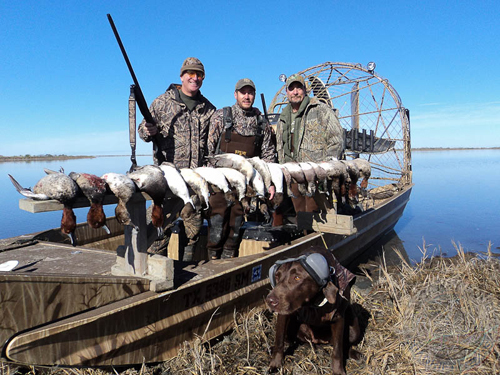
This one is in the books! We hope you had the opportunity to take it out with a bang. We’ve got an extended Snow Goose hunt going on as we speak. I haven’t heard how that’s going as of yet. We’ve still got some small numbers of Snows lurking around water and making for impressive wing shooting. Snow Goose Conservations Season started 01/30/12!


Fishing Scene

Some things on the water will still buckle my knees and impress me beyond words. “As I was rolling through a back lake the other day scouting ahead of an afternoon shoot, I started kicking mud stirs as Redfish and Black Drum scurried from my approach. Farther along the shoreline the mud stirs were on both sides of the boat stretching 15 to 20 yards both directions. This went on for a quarter of a mile and left me pretty much in awe of what I had just witnessed”.

Capt. James E. is reporting advanced patterns ahead of typical post Winter approaches with fish already tagging the mid 20’s and getting “solid”. Best approach is wading working a variety of low and slow soft plastics. Capt. Terry reporting productive Winter and Spring pattern drifts are taking mid teens of keepers working soft plastics over mud/shell. Capt. Doug reported slow bait fishing for Redfish while covering a bunch of water. Best action was working shell/mud for Trout with soft plastics.

Oyster Season

What you haven’t seen all Winter are the endless scores of Oyster boats working the reefs due to a Season Closure resulting from Red Tide outbreaks in the Fall. Hynes Bay just opened for a few days but is closing back down due to freshwater runoff coming down the Guadalupe from excessive rainfall in the Austin area. These guys just can’t catch a break, or can they? Word has it that Espiritu Santo Bay is opening today. I’m not sure if SAB will open or not. Busting up that shell always seems to help the fishing, so be patient with these guys. They’ve got a tough job and you can’t be any further down on your luck than they are right now.

Working Oyster Boats – Strategy

Set up a drift in the muddy water moving either down wind or down current coming off the Oyster boats dredge area. During Winter and Spring months, off color water is where it’s at and about the only source of that is coming from an Oyster boat dredge. The dredge is turning up small bait sources and dislodging them. Trout and Reds know it and you can have a lot of fun bending a rod with the sound of a dredge clanking while listening to your favorite Mexican music blaring over their boom boxes.

Pretty 2Cool

We are announcing an agreement with the great folks that bring you all the fast action on the water to continue sponsorship of the Fishing Forum for another 2 years. What makes that possible? You do! Thanks to everyone for making 2011 just an outstanding year for Castaway Lodge.

We hope you have a great week, come see us!

Capt. Kris Kelley
Castaway Lodge
1-888-618-4868
www.seadriftbayfishing.com


“February’s Trout Intel” Guide Lines, by Capt. Chris Martin

Archived in the category: Fishing Reports
Posted by Joyce Rhyne on 09 Feb 12 - 0 Comments

February is a month when I key in on mud and grass in protected coves, area drains, small bayous, and narrow channels at the point at which they lead out of the back lakes that are situated up and down Matagorda Island adjacent to San Antonio Bay. And it’s in these areas that I’ll continue to work my artificial baits slower and slower as the month progresses, hoping all the while to hook a couple of really big wintertime trout. Now then, in order for me to be able to catch big trout, I must first target big trout. In targeting these big gals over my career, there have been a few different types of baits that I have liked using on a regular basis. One type is what I refer to as the slow-sinkers. These are the ones like the soft-plastic Corky, the Corky Fat Boy, and the Corky Devil, all of which sink slowly toward the mud and grass until messaged to return toward the surface via a smooth, minimal motion at the end of my rod tip. Another type of artificial bait I’ve used with great results on trips accompanied by low tides and cold weather are the many different makes and models of suspending lures. These are the ones that some folks refer to as twitch-baits and I’ve thrown a lot of them over the years, but some of the more popular ones today are ones like the Catch 5, the Series III Catch 2000, and the 27MR MirrOdine. Depending on the brand and model, these lures will automatically position themselves in the water anywhere from 6-inches to maybe a foot (or even two feet) below the surface. They can generally be tossed-out and then retrieved at a steady pace with an occasional slight twitch from the end of your rod tip throughout the course of the retrieval pattern. They’re nothing short of fun and can be downright effective at catching big cold water trout and red fish when worked properly amongst the right conditions. Top waters will also produce, and my personal favorites have recently become the new GunDog series of top water baits that are now being manufactured by Texas Tackle Factory (TTF). One reason I like these new top waters is because it seems as though they are quite easy to toss and to retrieve in high-wind conditions that we’re so often faced with during this time of the year. These new GunDog baits have found a permanent home in my tackle box, as they have certainly yielded full stringers for me in recent months while fishing in many different situations and conditions. However, trying to be consistent in which lure you use can most often be the key thing to remember when selecting your lure for the day. Training yourself to pick the one lure that you have the utmost confidence in, regardless of the lure type, and then sticking with that same lure throughout the course of the entire day will minimize your number of lure changes, and consequently maximize the comfort level you have with the bait you selected, especially when you’re almost certain there’s big fish in the area. Numerous and massive strikes in February may become few-and-far-between, so don’t get frustrated when the action’s slow. Just keep grinding, and remember that good things always seem to come to those who wade or drift slowly!

If you prefer hunting your big trout this month using soft plastics (tails), then you might think seriously about lightening your overall presentation. Cold weather trout and red fish tend to move rather slowly during this time of the year, and because of this I often prefer using a 1/16-ounce lead-head with my plastics instead the 1/8-ounce that I would otherwise throw. It’s during this time of the year that I also like to reduce the weight and size of the line on my reel, normally downsizing to nothing larger than 12-lb. line, with 10-lb. being my personal preference. I know using smaller line may sound silly to some, but I find that doing so truly enhances the feel of the bite at a time when bites are often hardly felt at all, and that it really makes for more of a challenge once I’ve hooked into a big fighter. In maximizing your chances even further this month, learn to focus on the size and amount of baitfish in the general area rather than worrying yourself about the color of the water, as water color does not play as big a role in the day’s outcome as does the actual presence of natural bait. Tides and water levels are also important items to pay attention to when trying to decide where you might be searching for big fish this month. If the tides are high, I’ll often look for trout in some of the more remote areas along windward shorelines of back lakes. And when the water levels slack-off a bit, I begin positioning myself out in front of area drains leading out the back lakes.

In closing this edition of Guide Lines, I’d wish to remind you of the 2012 WINTER FISHING SPECIAL going on at Bay Flats Lodge during February and March. It’s a time when you and your guests can fish each day of the week at tremendously discounted rates. Additionally, Texas Tackle Factory (TTF) has teamed with Bay Flats Lodge (BFL) to bring you the BFL & TTF FEBRUARY / MARCH BIG TROUT CONTEST, where catching the biggest trout (while fishing with BFL during the months of Feb. and Mar.) will win you and three of your guests 2-nights of lodging and meals, and 2-days of guided fishing (a $2600.00 value). But that’s not all, if the winning trout is landing using a TTF lure, the winning angler will also receive a $200.00 gift certificate to shop the TTF web store, a quantity of 36 TTF Gun Dog Top waters (1 of each color – Flush, Flush Jr., Dummy, Little Dummy), 2 Bags of each color KFM Jive 45 Soft Plastic Baits, and 2 Bags of each color of the Gun Dog Shock collar. Furthermore, TTF is also sponsoring various daily prizes (too numerous to list here) for the biggest trout of each day, so please phone or email me to learn more about these special BFL events. Also, keep in mind that you can always stay informed as to the latest that Bay Flats Lodge has to offer by simply signing-up on the website to receive your daily newsletter.

Remember to practice CPR, “Catch, Photo, and Release”, whenever possible on trophy Trout and Reds…Guide Chris Martin, 1-888-677-4868
Bay Flats Lodge on San Antonio Bay www.BayFlatsLodge.com

Deb and I would like to thank Capt. Rick, Capt. TJ, Capt. Jason, Capt. Nathan, Capt. Cooper, and Capt. Jonathan, Angie our office Manager, Chef Austin, Grill Master Sherman, Housekeeping-Regina, Sunny, Mary, and Denise. Wait staff-Lori and Audrey. Thanks for taking care of everything while we were away.
 

TPWD Amends Nuisance Alligator Permit Process

Archived in the category: Fishing Reports
Posted by Joyce Rhyne on 09 Feb 12 - 0 Comments

Landowners will be able to contract directly with nuisance alligator hunters under new rules adopted by the Texas Parks and Wildlife Commission.

Over the past 20 years, once imperiled alligator population in Texas have rebounded spectacularly. Increased suburban, exurban, an industrial development in an adjacent to coastal counties, particularly along the mid- and upper coast, has resulted in increasing number of nuisance alligator complaints, especially in areas biologically characterized by diminishing or little to no habitat.

The new protocol will authorize a permitted control hunter to contract directly with landowner or landowner’s agent (including a political subdivision, governmental entity, or property owner’s association) for a fee or other compensation for the removal of nuisance alligators.

The new protocol requires that each nuisance control hunter complete a certification process that includes an application to TPWD, a department administered course and a test on nuisance control. Reporting requirements will ensure that only bonafide nuisance alligators are taken by permitted control hunters. An annual permit fee is also required.

Prior to the new rules, the Texas Parks and Wildlife Department had contracted with qualified individuals for the removal of nuisance alligators.  Each hunter bid for the privilege to conduct nuisance control activities in a specific territory, agreeing to pay a per foot price to the department for every alligator removed.  In return, the control hunter was allowed to keep the alligator and could sell the skin and meat.  All removals were authorized on a case by case basis by the department.
Persons interested in the nuisance alligator control program should contact Amos Cooper at 409-736-3625 (office) or 409-293-2836 (cell). Prospective permittees can also request the information by email at amos.cooper@tpwd.state.tx.us.


Untitled Document