Spring is in the Air on the Island By Clint Bennetsen

Archived in the category: Featured Writers, Island Life
Posted by The Dolphin Talk on 09 Mar 11 - 0 Comments

Island Life…

Greetings from the island everyone.  Hope all of you are doing well and enjoying some of these nice days we’ve been having.  As is normal for March, I’m sure we will have a few more northers blow through, but for the most part the feeling of Spring sure seems to be in the air.
These next few months are always my favorite time of the year on the island.  I’m just now beginning to see a few wild pea bushes stand out with their vibrant green foliage, against the still winter brown salt grasses of the island.  Within the next few weeks the pea bushes will dot the flat terrain and provide an excellent source of organic nitrogen fertilizer for the composter and later the garden soil.  I always cut the wild pea bushes above the soil line instead of uprooting them so that they will continue to provide year after year.
I’ve also started seeing a few barn swallows that begin arriving on the island in Spring and stay throughout the summer.  I expect them to return to the same mud built nest under the deck for the fifth consecutive year now, and hatch out two batches of baby birds.  With the exception of the small mound of poop directly below the nest, I always enjoy listening to and having them around until Fall.  But then again that poop is another source of organic fertilizer.
The migrating birds from other parts of the country also use the island as a brief stop-over in early Spring.  Beautiful colored birds like the Baltimore Oriole, Yellow-headed Blackbird and rainbow colored Painted Bunting have all made layovers here before continuing south.  I’m just glad that they travel through before the garden tomatoes have ripened.
The sea grass also begins washing ashore on the beach during the Spring months.  Even though it is unsightly and has a less than pleasant odor, the thick layers eventually settle into the beach sand and dunes and is nature’s way of providing an erosion barrier.  And yet again, the seaweed (kelp) is an excellent source of organic fertilizer for the garden, and is my primary soil additive out here.
If there is a negative aspect to Spring on the island, and I can think of only one, it would be the re-emergence of the big island rattlesnakes from their winter hibernation.  March-June is the “pay very close attention to where you walk” advice that I give visitors out here.  These months in particular are simply the prime times that rattlesnakes are on the move and mating.  I know of at least two small dogs that have died from bites by these snakes, and unfortunately it’s only a matter of time before a person is bitten.  You just simply have to be very careful and always scan with your eyes ahead of you where you are walking.  Some have said that the rattlesnakes should be left alone to multiply in order to keep the rat population down.  Well I’ll tell you what friend, I’ll gladly put up with a few rats that I can easily trap and keep away from the house, before I’ll allow a deadly rattlesnake anywhere near me or my dog.  Those types of people don’t have a clue.
My tomato plants, all of which I start from seed, are about three inches tall now and I look forward to putting them in the ground the first week of April.  I’ll designate about 12 plants that have the genetic capability to grow a huge tomato in my attempt to grow a 3 pounder this Spring, and then another dozen or so plants for my eating and giving away tomatoes.  I’ve been asked about my favorite variety of tomato seed that has the proven genetics to grow big, and for those interested I would highly recommend the Big Zac Hybrid tomato.  These seeds can only be purchased through Totally Tomatoes seed catalog, 800-345-5977, along with many other varieties.  Growing tomatoes from seed is not difficult, only a little more involved, but it is such a sense of satisfaction to be able to enjoy a delicious homegrown tomato that you started from a tiny seed.
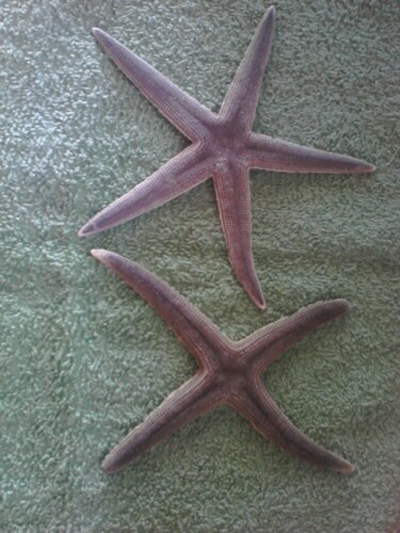
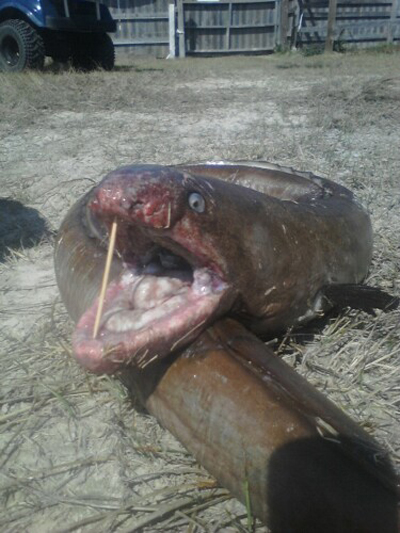
I had two unusual finds on the beach this past month.  One was a true four-legged starfish, the first one I have even seen, and also a 5 1/2 foot Moray eel that was about four inches in diameter washed ashore.
Well that’s it from the island for now.  Everyone take care and enjoy the coming beautiful Spring days that we will be having.

Little Texas Town – Big Texas History By Bob Jamison

Archived in the category: Featured Writers
Posted by The Dolphin Talk on 09 Mar 11 - 0 Comments

A mere one hundred and seventy five years ago on the 2nd of March, Texas declared its independence from Mexico. Almost within the sounds of the rattle of gun fire from the Mexican army, delegates arrived at an unpainted clap board style building on March 1, 1836. The next day they agreed and signed the Texas Declaration of Independence. It was formulated on March 17 just prior to the arrival of Mexican troops. The area was abandoned until April 21st, 1836 when Santa Anna and the Mexican army were defeated at San Jacinto.
Washington on the Brazos is now hallowed ground as the inscription over the door reads, “Here a Nation was born.” We can visit this site which is now known as “the birthplace of Texas”. The Hall of Independence, as it is also known, stands in that spot as the building replica of that famous occasion. You may literally walk in the tracks of Texas heroes such as Davy Crockett and other greats through the grounds of the museum.
Located just between Brenham and Navasota, Texas, Washington on the Brazos was once the county seat of Washington County. Then it was transferred to Brenham in 1844; and remains so today. Not only that, Washington on the Brazos was essentially lobbied as the capital of Texas but it yielded to Waterloo, Texas. That village is now the city of Austin. Actually, the railroad by passed the cotton rich area and the town slowly was abandoned prior to l900.
The state of Texas bought fifty acres of the townsite in 1916. More was purchased in the years 1976 and 1996 for a total of 293 acres. An experience awaits everyone with attractions such as Independence Hall, Barrington Living History Farm and the Star of the Republic Museum. Period costumes add to the authenticity with a flash back story of the history of Texas. Blinn College of Brenham administers this sacred site.
The last President of the Republic of Texas, Dr. Anson Jones, founded his farming homestead. His home was moved to this site in 1844 to become the living museum. Also, for public convenience, a visitor’s center and gift shop is an attractive addition and is free to all. It includes a conference center and an education center.
Local folks, especially in the Houston area, are familiar with the city street named Washington Avenue. This street got its name as it was the road to Washington on the Brazos or to be later known as the Hempstead Highway or US 290.
If you are a native Texan, a new “Texan” or just passing through, make Washington on the Brazos a meaningful stop. Of course, it is not exactly Washington on the Potomac, but to us Texans it is just as important.
This writer can be located on jamisonwildife. com or  jbobalong@yahoo.com.

Visit Texas Historical Sites a little closer to home….

Archived in the category: General Info
Posted by The Dolphin Talk on 09 Mar 11 - 0 Comments

Site of First Capital of the Republic of Texas only 75 miles north of Port Lavaca on Hwy 35
West Columbia served as the First Capitol of the Republic in 1836. Exhibits at the museum located at 247 E. Brazos Ave. in West Columbia, include artifacts ranging as far back as the Texas Revolutionary Period. Numerous images of the building in which Sam Houston took the oath of office as the first president of Texas are on display. It is only fitting that a historical museum be located at the site of the First Capitol of the Republic of Texas, established in Columbia in 1836. The mission of the museum is to bring better understanding and appreciation of the rich history of West and East Columbia in Brazoria County. Hours of operation are Thursday through Saturday, 10:00 a.m. until 2:00 p.m. Tours by appointment are also available. Phone 979-345-6125 for more information.
Varner-Hogg Plantation State Historic Site
Located two miles north of West Columbia, pecan orchards, magnolia trees and generations of Texas history and commerce encapsulate Varner-Hogg Plantation State Historic Site. The home tells the story of its three owners: Austin colonist Martin Varner, sugarcane mogul Columbus Patton and Texas Gov. James S. Hogg. This property hosted sugarcane production, rum distilling and oil drilling as it transitioned through families. Explore the plantation house, stroll the magnificent grounds and hear stories of 19th and early 20th century Texas. The plantation is open for tours Tuesday through Sunday from 8:00 a.m. until 5:00 p.m. Admission fees are: Adults: $6;  Ages 6-18/Students with ID/Adult Tour Groups: $4 per person ; 5 and under: free; School Groups: $1 per student (reservations required);  Grounds Use/Self-Guided Outdoor Tour Only: $1. For more information: 979-345-4656.

Varner-Hogg Plantation

Cattle Boom! Ranching in Victoria and the Coastal Bend, 1845-1929

Archived in the category: Events
Posted by The Dolphin Talk on 09 Mar 11 - 0 Comments

Texas’ legendary cattle industry originated in the Coastal Bend.  The exhibition, Cattle Boom! Ranching in Victoria and the Coastal Bend, 1845 – 1929, explores a time of remarkable change in the land, the stock and the people of the Texas ranching trade.
Cattle Boom! tells the story of ranching families, cattle drives and ranching culture through artifacts, historical photographs, documents and maps from regional collections.  This exhibition is organized exclusively for the Museum of the Coastal Bend and will not be seen elsewhere.  In support of the museum’s exhibition, the Victoria College/University of Houston-Victoria Library is hosting an online exhibit of historical ranching photographs from families in Victoria and the surrounding region.
A grand opening for the exhibition will be held on Thursday, April 7 with a keynote address by Todd Staples, Commissioner of Agriculture for the State of Texas.  Tickets for the event are available at the Museum of the Coastal Bend.
Guided tours for elementary and secondary students are currently being scheduled for this spring, and are specifically designed to assist teachers in meeting and reinforcing TEKS curriculum requirements.
Cattle Boom! has been organized with the assistance of Raymond Starr, Ph.D., historical consultant, and the VC/UHV Library. The online exhibit is made possible by a grant from the U.S. Institute of Museum and Library Services and the TexTreasures Grant Program of the Texas State Library and Archives Commission.
Cattle Boom! will be open to the public from March 29, 2011 through 2012.   Viewing hours are Tuesday – Saturday, 10 a.m. – 4 p.m.
The Museum of the Coastal Bend is located on the campus of Victoria College, Victoria, TX, at the corner of East Red River and Ben Jordan. Admission is $3.50 for adults, $2.50 for senior citizens, and $2 for students ages 4 years through 8th grade.  Admission is free for museum members, faculty, staff and students of Victoria College and the University of Houston – Victoria, and for children under 4 years of age.

Sundown Island Spring Work Day By Peggy Wilkinson

Archived in the category: Events
Posted by The Dolphin Talk on 09 Mar 11 - 0 Comments

It was a foggy morning as the Audubon Egret II and Jack Jackson’s boat headed across Matagorda Bay. Once we found our way through the fog to the pier, a light south wind helped make the perfect weather for a great work day on Sundown Island.
Our group of hard working volunteers were ready to get started. Once we unloaded the boats, volunteers got busy planting 60 new tree seedling trees – including Texas Ebony, Spiny Hackberry, Elbowbush, Huisache, and Live Oak. They also transplanted eleven salt cedar trees that were falling off the beach due to coastal erosion. Most of our trees from the fall workday survived but were in need of weeding and watering. Our watering system on Sundown Island is critical for delivering fresh water to our new trees. Past tree plantings have resulted in great habitat for our birds to nest in.

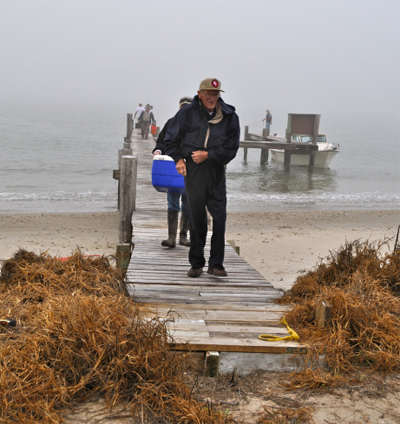
Warden Chester Smith unloading the boats at Sundown Island, getting ready for the Spring Work Day. Photo by Peggy Wilkinson

Jobs tackled by our volunteers included:
•  Trimming freeze damage on several older trees by the tractor shed and weeding around the trees,
•  Installing a new rain-water collection system on the side of the new shed addition,
•  Treating for fire ants,
•  Constructing new shelving in the shed,
•  Repairing freeze damaged piping under the windmill,
•  Cleaning up trash from the beach,
•  Repairing one of the Sundown Island signs.
We observed a few early tenants—including about 50 pairs of Great Blue Herons starting to build their nests and a group of Tricolored Herons searching for the best nesting spots. Also spotted were a pair of Oystercatchers on the beach (hopefully already nesting), a large group of American Avocets, Red-wing Blackbirds, lots of Cormorants, and of course Brown Pelicans.
The Warden is concerned about the coastal erosion on Sundown Island. Shoreline continues to erode and with it have fallen some mature salt cedar trees. Donna Anderson with U. S. Fish and Wildlife Service visited the Island the day before work day to help brainstorm the best ways to slow down the erosion. We are going to develop a plan of action and apply for grants and funding from other sources.
As the crew was getting ready to head back, a large rattlesnake was spotted laying across the trail, sunning and enjoying his day! He quickly slithered away into the brush, so good luck to our next visitors!
Thank you Formosa Plastics for sponsoring Spring 2011 workday! A BIG THANK YOU to all our hard working volunteers! We completed quite a few jobs and are ready to welcome ALL our birds back to the island.
The Spring 2011 Work Day workers on February 19 included: Mark Behrens, Abel DeLeon, Victoria Fluitt, Jack Jackson, Jennifer and Ethan Perry, Nancy Posey, Curtis Short, Warden Chester Smith, Ed Taylor, Tim and Peggy Wilkinson and W.T. Wilkinson.

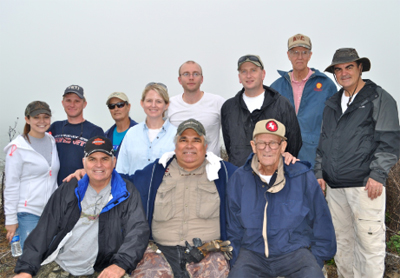
Front row, left to right: W.T. Wilkinson, Abel DeLeon, Warden Chester Smith. Back row, left to right: Victoria Fluitt, Mark Behrens, Nancy Posey, Jennifer Perry, Ethan Perry, Curtis Short, Ed Taylor, and Tim Wilkinson. Jack Johnson and Peggy Wilkinson not shown. Photo by Peggy Wilkinson

Untitled Document