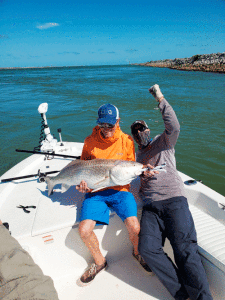
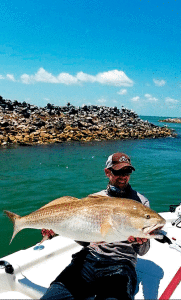
Using cracked crab for bait, 25 Bull Reds were caught and released off Port O’Connor the weekend of 8/15.
Photo at top: Mark Moore from Cedar Park with his 44’ red. Below: Brad Burgtorf from Cedar Park with his 42” red.
Weekend Haul
Archived in the category: Fishing Reports, General Info
Posted by Joyce Rhyne on 17 Sep 20 - 0 Comments
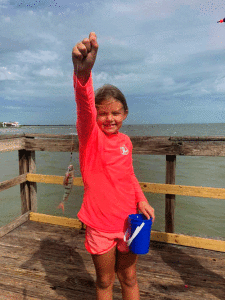
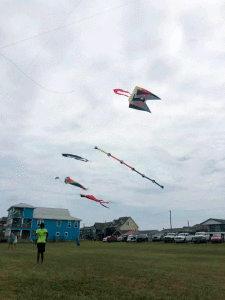
Thanks Coastal Bend Marine for a fun Kids’ Fishing Tournament and Kite Flying Contest!
Posted by Joyce Rhyne on 17 Sep 20 - 0 Comments
Nice photo!
Archived in the category: Fishing Reports
Posted by Joyce Rhyne on 17 Sep 20 - 0 Comments
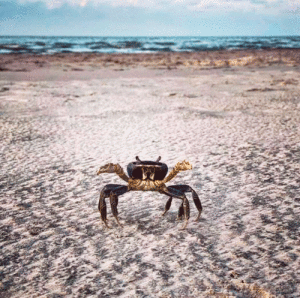
This close up of a crab on Port O’Connor’s beach was taken by sixth grader Heather Whiteright.
Intercoastal 4-H Club
Archived in the category: General Info, Organizations
Posted by Joyce Rhyne on 17 Sep 20 - 0 Comments
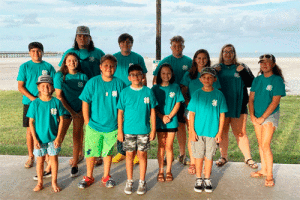
The Intercoastal 4-H Club had their first meeting of the 2020/2021 year on September 7, 2020. Although the Calhoun County Fair is cancelled this year, we are still preparing our animals for the Livestock Show! We will be electing the 2020-2021 club officers October 5, 2020. Make sure to be there and bring a friend!
VP/Reporter- McKenna Guevara
September is for Ruby-throated Hummingbirds! by Susan Heath
Archived in the category: Featured Writers, General Info
Posted by Joyce Rhyne on 17 Sep 20 - 0 Comments
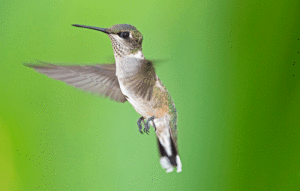
By the start of September, Ruby-throated Hummingbird migration is well underway and we’ve been seeing them regularly at the Gulf Coast Bird Observatory. It’s time to get those feeders out! These little jeweled warriors will let you know if you are tardy in meeting the demands of their sweet tooth.
Ruby-throated Hummingbirds begin southward migration in August and continue through October with mid-September as the peak of their journey. Weighing in at only 3 grams, they are a terror in the air and definitely not candidates for good behavior which is why we say they don’t work and play well with others. Sharing is just not their thing.
Ruby-throated Hummingbirds breed as far north as central Canada and the majority of them spend the winter in Mexico and Central America. In order to keep up with their dual home strategy, they have to fly as much as 1,000 miles twice a year between their wintering and breeding grounds.
There was once a myth that the Ruby-throated Hummingbirds hitched rides on the backs of other birds in order to make the journey across the Gulf. While that’s a fun idea, it is not reality. These little birds make the impressive journey flying all on their own.
Fortunately for us, the Texas Coast is right in the middle of their migration flight path. Some will follow the coast around, but others will take the shorter route straight across the Gulf of Mexico. To meet the energy demands of this flight, they can double their body weight with fat in a matter of days by bulking up on nectar from flowers and feeders and from eating insects.
Though there are 15 species that breed in the western U.S., The Ruby-throated Hummingbird is the only breeding hummingbird in the eastern U.S. While we are inundated with southbound Ruby-throated Hummingbirds in the fall, during the winter, this area is home to several species of western hummingbirds including Rufous, Allen’s, Broad-tailed, Calliope and Buff-bellied Hummingbirds
.
Sometimes we get other species too, but Rufous are by far the most common and they have already begun to arrive. Although we often have a few lingering Ruby-throats in winter, most of them will leave by mid-November, but the western hummingbirds will be here through March until they head back west.
If you are interested in enjoying the hummingbird migration, check out our virtual hummingbird festival on Saturday September 19th or 26th, from 8 until noon on Gulf Coast Bird Observatory’s live Facebook feed. You can watch hummingbird banding, listen in on informative talks about hummingbirds and native plants, and even symbolically adopt a Ruby-throated Hummingbird of your own. If the bird you adopted is identified somewhere else by its band, we’ll send you a post card letting you know when and where it was seen.
If you want to spruce up your yard for the birds, check out our native and flowering plant offerings in our online store. You can buy online and pick them up at Gulf Coast Bird Observatory with contactless pickup.

