Abandoned Crab Traps Removed by Carl Ray, POC CCA

Archived in the category: Fishing Reports, General Info, Organizations
Posted by Joyce Rhyne on 20 Mar 14 - 0 Comments

Mike Sharp and Carl Ray of Port O’Connor CCA collect abandoned crab traps on February 22.


Annual Closure and Removal held February 21 – March 2, 2014

Crab traps left unattended in the bays are virtual killing machines.  A fish or crab or other aquatic animal gets into the trap and dies, then another fish or crab goes into the trap, eats the dead and then dies to provide food for the next one or more.  So it goes, on and on.

We have found very old and beat up traps with as many and six stone crabs captured and dying.  The cleanup guys and girls who bring their boats to scour the bay systems near Port O’Connor are CCA members from POC, Victoria, and other areas of the state, and other conservation minded fisher-folks.  TP&W employees help with unloading the boats and providing dumpsters to haul off the traps.

This year + – 56 traps were collected at the TP&W compound in POC and a few more by Preston Luster and others down at Charlie’s at the end of The Lane near Seadrift.  Mike Sharp and I (Carl Ray) retrieved 13 traps but Liz Hewitt and her helpers topped us out at 15 traps.

On the day for our consolidated removal efforts (February 22), CCA POC provided Bar-be-Que with cold slaw, all the other trimmings and “soft” drinks at the TP&W Compound.

Some of the conservation projects that POC CCA and other chapters of CCA Texas have contributed to are: opening Cedar Bayou to allow free water flow from the Gulf into Aransas and Mesquite bays; five near-shore artificial reefs (one near POC); three oyster reef restorations; shoreline protection; marsh restoration; debris removal from Aransas Pass and many other projects, as well as college scholarships.

The POC CCA holds it’s annual banquet at the Community Center where more than 300 folks gather to have a great time raising funds which help to promote conservation of our bays, the Gulf of Mexico and the fisheries that occupy those waters.  We have five or six unscheduled meetings, with plenty of notice, each year in addition to our banquet.  This year the banquet will be held on Saturday, October 18th.  All are welcome.

Anyone interested in joining our organization may call the president, Bill Moore 361 983 4690 or vice-president Mike Sharp 361 983 4713  or Carl Ray 361 983 4252.

Nice Trout!

Archived in the category: Fishing Reports, General Info
Posted by Joyce Rhyne on 20 Mar 14 - 0 Comments

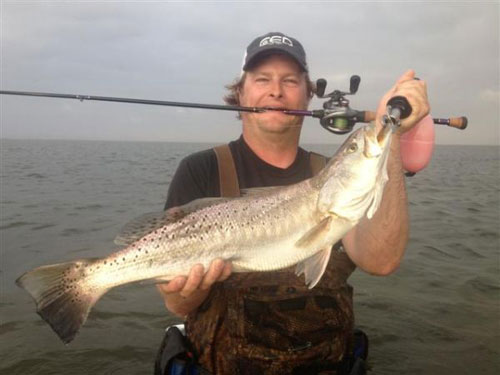
Captain Kirk Morgan caught this 28.5” trout in Port O’Connor waters the last week of February.

Want to catch big trout like this one? Then tie on a slow-sinking mullet imitation lure like a Corky or Bomber Mullet. Top colors are chartreuse/bone or red/white. -Capt. Robert Sloan Photo

The first day of spring is March 20, and hopefully by then we will have seen the last of Old Man Winter and his blustery cold fronts. Fortunately it only takes a couple of days of warm afternoon sunlight to jump start hungry trout.

Some of the best fishing for trophy trout out of Port O’Connor will be in the back water lakes, and along islands with a combination of mud and grass.

Some of the best catches of trout during late winter and early spring will be on mullet imitation lures, and one of the most famous is the slow-sinking Corky.

The Corky is one of the most successful mullet imitation lures of all time, and it’s most effective on big trout right about this time of year.

The man behind the development of a Corky is Paul Brown. When he first developed the Corky Brown, he had no idea it would be so successful. But when it was used to catch a state record 13-pound, 11-ounce speckled trout on Feb. 6, 1996, the popularity of this lure exploded.

The Corky craze started in 1974, in a garage. The original lures included a Corky, Fat Boy and Devil in floating, slow sinking and fast sinking models. They are now called the Paul Brown Original Series by the L&S lure company.

Just recently the Corky lure was sold to the MirrOlure Company in Florida. But at the peak of this lures success in the 80’s and 90’s about the only way to get them was to call Paul or his wife Phyllis in Houston and place an order. Credit cards were taboo. And when you sent a check the product was shipped after the money was in the bank. The only other option was to buy them from Cut Rate Tackle.

When Jim Wallace caught a Texas state record trout on a 3-inch long chartreuse and sparkle Corky this lure shot to stardom in a flash. That catch was made on Feb. 6, 1996 on Baffin Bay, south of Corpus Christi. On that day Wallace was fishing with Ed Stedman and Ronnie Sellers. Each had caught career trout that day. Wallace bested the state record with his 13-11 trout. Stedman had a 12-1/4 pounder, and Seller’s strung an 11-pounder. All three trout were caught within minutes of each other in knee deep water. All were caught on Corky lures.

A Corky is made of soft plastic with a core of cork, and holds two treble hooks. The best way to fish a slow sinking Corky is with a very slow up and down movement of the rod. The bite will almost always come while the lure is falling. A Corky has very little action, even at that trout seem to love them.

Flesh eating bacteria kills Lake Conroe fisherman
By Doug Miller / KHOU 11 News, Houston

A fisherman, who suffered a seemingly minor scrape during a Sunday outing on Lake Conroe, died from an infection of flesh-eating bacteria on Feb. 28.

Travis Lee Moore, a 74-year-old retired postal worker and former firefighter from the Southeast Texas town of Chester, succumbed only five days after a fishing trip with four of his brothers.

“It was a scrape on the top of his hand, on his finger,” said his brother, Robert Moore of Woodville.

The infection’s severity didn’t become apparent until two days after the trip, when his family thought Moore was suffering a heart attack. His brother, Robert, took him to a hospital in Huntsville where the problem was diagnosed.

What is the March Equinox?

There are two equinoxes every year – in March and September – when the sun shines directly on the equator and the length of day and night is nearly equal. Seasons are opposite on either side of the equator, so the equinox in March is also known as the “spring equinox” in the northern hemisphere. However, in the southern hemisphere, it’s known as the “autumnal (fall) equinox”.

On the equinox, night and day are nearly exactly the same length – 12 hours – all over the world. This is the reason it’s called an “equinox”, derived from Latin, meaning “equal night”.

The March equinox occurs the moment the sun crosses the celestial equator – the imaginary line in the sky above the Earth’s equator – from south to north. This happens either on March 19, 20 or 21 every year.

Top fishing equipment brands for 2013

Southwick Associates’ Angler Survey has just announced the brands and products anglers purchased most frequently in 2013. This list has been compiled from the 18,559 internet-based surveys completed in 2013 by Angler Survey panelists.
The following is a partial list of sportfishing’s most frequently purchased brands in 2013:

Top rod brand: Shakespeare (Ugly Stik, Sturdy Stik, etc.), top reel: Shimano; top fishing line: PowerPro; top soft bait: Berkley Gulp; top spinner bait: Strike King; top wader brand: Hodgman ; top clothing brand: Columbia; top raingear: Frogg Toggs and the top trolling motor brand is Minn Kota.

Want to catch more fish? Here’s how you do it: Call Capt. Robert Sloan at 409 782 6796, email – sloan288@aol.com
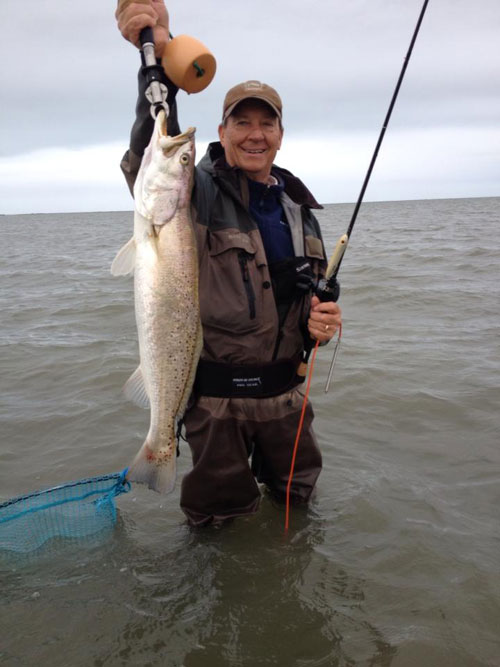
 

Fishing with firstcastguideservice

Archived in the category: Fishing Reports, General Info
Posted by Joyce Rhyne on 20 Mar 14 - 0 Comments

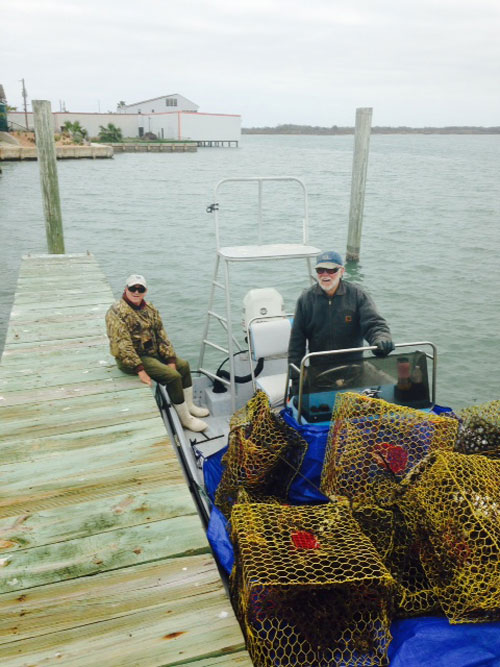
Doug R. and friends fishing with Capt. John Ashley firstcastguideservice.

Hook a Big One? If it didn’t get away, send us a photo: dolphin1@tisd.net

“A Seasonal Evolution” By Capt. Chris Martin

Archived in the category: Fishing Reports, General Info
Posted by Joyce Rhyne on 20 Mar 14 - 0 Comments

Thomas M. party, tough weather conditions with Bay Flats Lodge Captain Steve Boldt March 10, 2014.

As the March weather begins to warm the environment, the trout and the reds will start to move into water that’s nowhere near as deep as that which they have been in over the past few months. Spring will bring with it more sunlight each day, which means that the shallows along many of our local flats areas should begin to warm a little bit more with each passing day. As this warming trend unfolds upon the shallows, area baitfish will relocate to the flats and will begin to become very active as the days continue to get warmer. And wherever the bait goes, so shall the trout and the reds. Over the past winter months, the water has been cold, and so have the fish, so they are now ready to fulfill what can sometimes be witnessed as being a very aggressive appetite. And because the fish will become more active this month due to their desire to satisfy their craving for food, anglers wanting to get in on some hot trout action should always make it a point this month to focus on locating active bait whenever possible.

Springtime can mean altering winds and altering tides, which often leaves bay waters disturbed and discolored. When this happens, don’t be discouraged. Learn to look for signs of fish being in the immediate area. If you see a mullet jump out of the brown water, stop for a few moments and observe the entire area before you leave to look for cleaner water elsewhere. If you see a lot of mullet jumping, disregard the fact that the color of the water doesn’t look appealing to you. There is bait in the water, and it is being driven to the surface by hungry predators. Drop anchor and setup a wading session with a top water or plastic bait of your choice. We have recognized extreme success more times than I can remember in water that looks just terrible. Fishing with top water baits in these conditions can often require a huge amount of persistence on behalf of the angler, so it may be necessary for the top water enthusiast to prepare mentally ahead of time, as you’ll most likely need a lot of patience in these conditions. Some of our best results in discolored water have come from the use of dark slow-sinkers, twitch-baits, and assorted plastic tails. A few of the more popular slow-sinking baits include the Corky, the Corky FatBoy, and the Catch 2000. As for twitch-baits, the ones that have consistently produced for us over the years come from MirroLure, and include some of the ever-popular models like the 51MR and the 52MR. But when it comes to plastic tails, there are a lot of them to choose from. And with mullet being a primary bait target right now, anglers should strongly consider paddle-tail models like the Killer Flats Minnow, the Red Killer, or the Flapp’n Shad.
On cooler mornings this month, we will start out our day over mud and grass simply because this is where the fish may prefer to be since the water temperature may not yet be as warm as the fish like it to be, and the mud helps to keep things warm. However, as the sun rises into the late-morning sky and is given an opportunity to heat things up a bit, we will move our efforts from above the mud to above that of hard sand or shell. As a matter of fact, my time-of-day preference for fishing in March is from noon to dark, instead of first thing each morning. Why? Simply because of the warming factor this month. The shallows are generally going to be warmed substantially by the end of each day this month before the sun goes down for the evening. The nights this month may still be somewhat cool, so the fish will often tend to relocate to deeper water environs during the nighttime hours, only to return to the shallows the next day once the water has been given a chance to warm once again. Now then, I realize a lot of coastal anglers only have limited amounts of time to fish, and that “blowing” the morning may not sound too appealing to most, but it is something you can certainly take into consideration next time you’re out on the water this month.

Like we discussed earlier, with this month being the official start of spring, there will be windy days for us to contend with. However, if you happen to be fortunate enough to be out on the bay fishing on a day absent of much wind this month, you should strongly consider taking advantage of the situation by focusing your attention on one of the many shell pads that happen to be sprinkled around the San Antonio Bay vicinity. The shell acts as somewhat of a safe-haven for many, many members of the marine food chain. Because of this, hot trout action can often be the result over the shell this month, especially whenever given low wind conditions, afternoon warming, and greener water. Some of our best-catch days have occurred in just these same conditions atop many of the oyster reefs in San Antonio Bay this month.

Even though March does signal a time for warming, that doesn’t mean we’re completely safe from experiencing another couple of cold days this month. Stray frontal passages this month could still inject a day, or two, of cold weather. When this happens, you’ll have to try locating the trout in places other than the shallows. We like finding bait and bird combinations in these instances. For example, on cold days when we happen upon finger-mullet activity where we see Cormorants operating, we know there are trout and reds in the area. All that’s left to do is to pinpoint their exact holding spot.

The arrival of spring is upon us, and this change in seasons will most certainly mean more boat traffic on area coastal waters. Be safe, be courteous, and obey the law. There’s a lot of water out there, and there’s plenty of room for all of us to enjoy it together.

Untitled Document