4th of July Weekend at the Beach

Archived in the category: General Info
Posted by Joyce Rhyne on 12 Jul 12 - 0 Comments

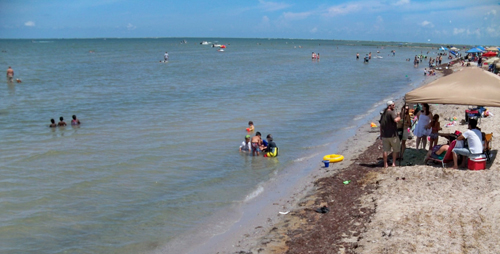
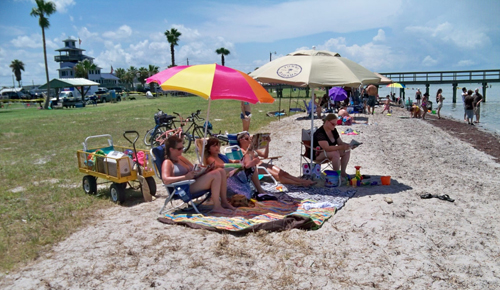
King Fisher Beach began filling up early in the day.

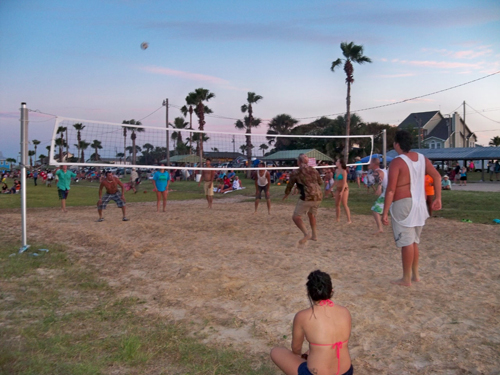
The volleyball court was busy throughout the day.

Waiting in line for a treat.

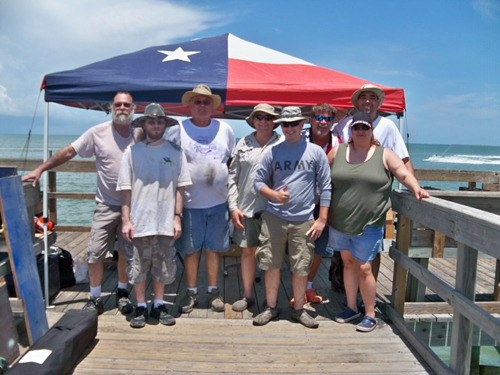
The Fireworks Crew Chairman Donny Haynes, third from right

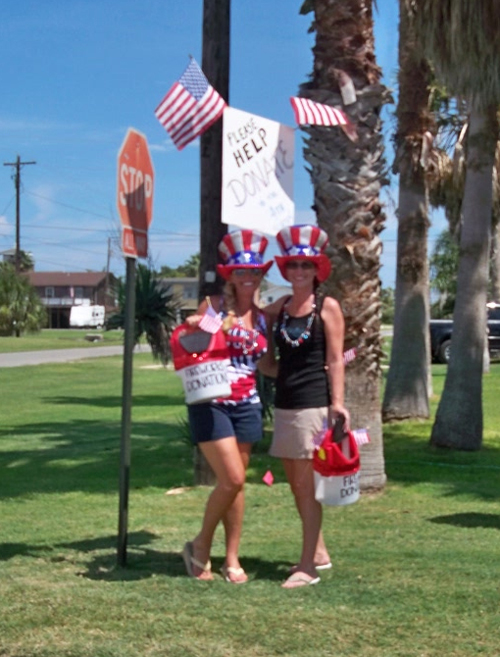
Kimberly Bennett (left) and Nicole Bordeman (right) raised over $600 in just a couple hours from cars entering the park area.

The Fireworks Campaign is on-going. Donation cans are at Port O’Connor restaurants and Speedy Stop, or you can mail a check to:

POC Chamber Fireworks; Port O’Connor Chamber of Commerce; P.O. Box 701; Port O’Connor, TX 77982.

Your help in keeping POC’s Fireworks Show an outstanding annual event is greatly appreciated.

Port O’Connor put on another spectacular Fireworks Show on July 7th.

– Photos by Bill Tigrett

Thanks to all who made Port O’Connor’s annual Fireworks Show a success!

Calhoun County Dedication The Great Camel Experiment

Archived in the category: Announcements, General Info
Posted by Joyce Rhyne on 12 Jul 12 - 1 Comment

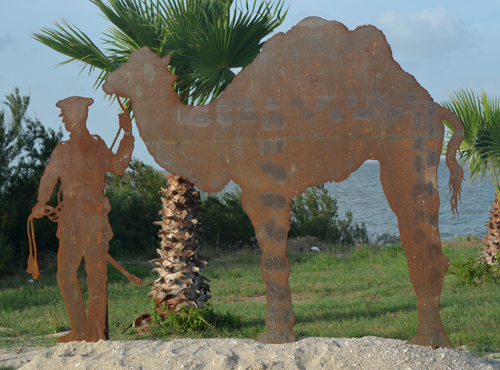
Where Highway 316 starts, near the State Park at Indianola, a new metal art silhouette now stands to commemorate the beginning of the “Great Camel Experiment”. Supported in Congress by Secretary of War, Jefferson Davis, the first load of 33 Camels landed at Indianola on May 13, 1856.

The camels created quite a stir among the residents at this once prosperous frontier seaport. Several weeks later the camels made a trek on foot to their headquarters at Camp Verde near Kerrville, Texas. More camels arrived later and several expeditions into the desert southwest were made to test their endurance. One major expedition crossed NM and AZ, and arrived at Ft. Tejon, CA in 1857.

The steel silhouette sculpture at Indianola, titled “On a New Shore”, by artist Brian Norwood of Jal, NM, was commissioned by the Calhoun County Historical Commission (CCHC) in 2011. “While the “Great Camel Experiment” was considered a success by many directly involved”, said Gary Ralston, CCHC member. “the beginning of the Civil War effectively brought an end to that chapter of camel history in Texas. Still, today, from Indianola to Camp Tejon, historical markers and monuments mark the way of this bold experiment across the American west that started at Indianola.”

Generously working with the Calhoun County Historical Commission to install this sculpture at Indianola were the Texas Dept. of Transportation, Calhoun County Pct. 1, the Guadalupe Blanco River Authority, and Adventure Machine & Fabrication in Port Lavaca, Texas.

– Gary Ralston
– Photos by Jennifer Schulte

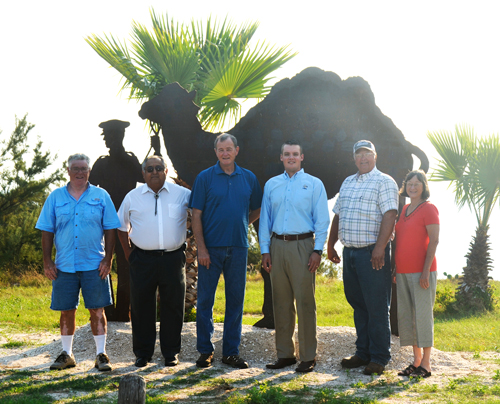
Left to right: Steve Koch (CCHC), Roger Galvan (Pct 1 Commissioner), Gary Ralston (CCHC), Tommy Schulte (GBRA), Wesley Abraham (TXDOT), and Mary Belle Meitzen (CCHC).

The Night World War II Came to Calhoun County by Peter DeForest

Archived in the category: Featured Writers, General Info
Posted by Joyce Rhyne on 12 Jul 12 - 0 Comments

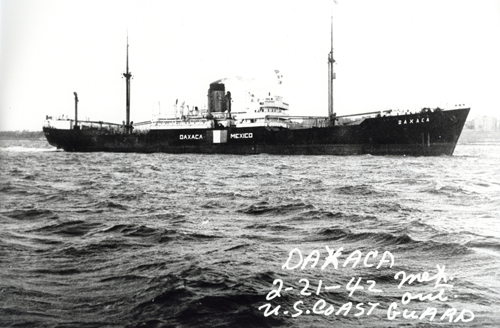
The freighter Oaxaca, which was sunk by the German Submarine U-171 eleven miles from Port O’Connor during World War II. -Picture courtesy of Henry Wolff Jr. of Victoria

This July 26th will be the 70th anniversary of when World War II came to Calhoun County up close and personal. When most people think of World War II they are reminded of places such as Normandy, Pearl Harbor, or other places far from South Texas. But some of the fighting occurred right off our beaches, within sight of land.

World War II, or the Second World War, took place from 1939 to 1945 involving a majority of the world’s nations, including the United States. The United States entered World War II when war with Japan was declared on December 8, 1941 the day after the Japanese attacked the U.S. naval base at Pearl Harbor. Three days later on December 11, 1941, Germany declared war on the United States. Few people in the states ever expected that the war would come to our shores, but in January of 1942 the German Navy launched “Operation Drumbeat”. This operation involved the sending of five U-boats to attack shipping off of the East coast of the United States. The word U-boat is a version of the German word Unterseeboot, and refers to military submarines operated by Germany in World War II.

The United States, having no experience of a modern naval war close to its own shores, did not employ shore-side blackouts, or any increased naval patrols. The U-boats simply waited and picked off ship after ship in broad daylight, and at night as the ships were silhouetted against the lights of the major cities. Sometimes the U-boats attacked on the surface, using their deck guns to save torpedoes, people on shore sometimes witnessed these attacks firsthand. By the time this first group of submarines ran out of torpedoes and started their return trip back to Europe, twenty-three ships had been sunk with not a single U-boat loss.

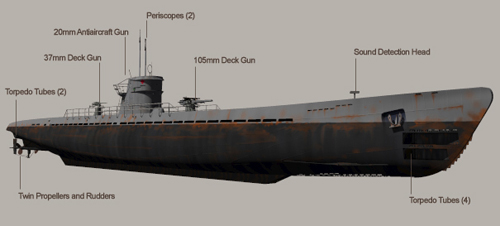
When the second group of U-boats left their German bases in Europe for the United States, several of them had orders to enter the Caribbean and Gulf of Mexico. Most of the U-boats sent to the Gulf of Mexico were type IX-C U-boats, which were large ocean-going submarines designed for sustained operations far from any support facilities. They had a range of over 13,000 nautical miles, and could easily operate in the Caribbean, Gulf of Mexico and the South Atlantic without needing to refuel. Type IX-C U-boats were armed with a 105mm deck gun, a 37mm anti-aircraft gun, a 20mm anti-aircraft gun, and had six torpedo tubes; four at the bow and two at the stern. They carried six extra torpedoes internally and had five external torpedo containers (three at the stern and two at the bow), which stored ten additional torpedoes. The total of twenty-two torpedoes allowed type IX-C U-boat captains to follow a convoy and strike night after night.

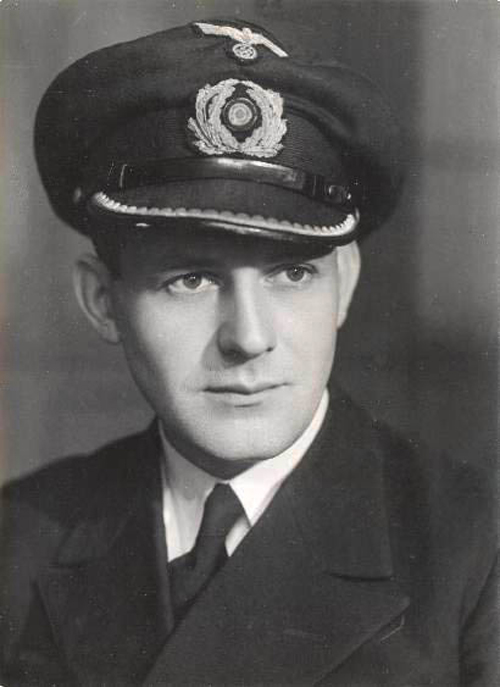
One of the IX-C U-boats to enter the Gulf of Mexico was Unterseeboot 171 (U-171). The U-171 was sent to the Gulf of Mexico under the command of Oblt. Günther Pfeffer. U-171 sank three ships in the Gulf of Mexico; the oil tanker Amatlan near the Texas-Mexico border, the oil tanker R.M. Parker Jr off of Louisiana, and the freighter Oaxaca off of Port O’Connor.

German Submarine U-171 Captain Oblt. Gnther Pfeffer, who sank the freighter Oaxaca eleven miles from Port O’Connor during World War II.

Cartoon drawing by some of the U-171 crewmen

Emblem of the German Submarine U-171

The Oaxaca was a freighter that had previously been a German-owned ship, but when World War II broke out, the Mexican Government took possession of the ship and changed the name. The Oaxaca was a 6,000-ton freighter that normally carried dry cargo. The captain of the Oaxaca was Francisco Rodríguez Reybell. On July 26, 1942, the Oaxaca left the port of Corpus Christi with a load of rubber, caustic soda, and other miscellaneous cargo. The crew of the Oaxaca thought wrongly that by keeping close to shore they would be safe from any U-boat attack. That night the U-171 sighted the Oaxaca sailing up the Gulf Coast eleven miles from Port O’Connor, the U-171 fired two torpedoes, one of which hit the Oaxaca and detonated with a loud explosion. The Oaxaca broke in half and sank within three or four minutes of being hit. Six crewmen out of the crew of thirty-six were killed. The Air Force base on Matagorda Island was being built at the time, and workers who were asleep in temporary housing on the island were awakened by the sound of the torpedo exploding and assisted many of the survivors as they were brought to shore. On October 9, 1942 while returning to base, U-171 hit a mine and sank in the Bay of Biscay off of the Western coast of France.

U-507 under the command of Kapitänleutnant Harro Schacht sank the cargo ship Alcoa Puritan with its deck gun about 45 miles south of the New Orleans on May 6, 1942, and then shocked authorities by torpedoing and sinking the gasoline tanker Virginia in the mouth of the Mississippi River on May 12, with the loss of twenty-six sailors.

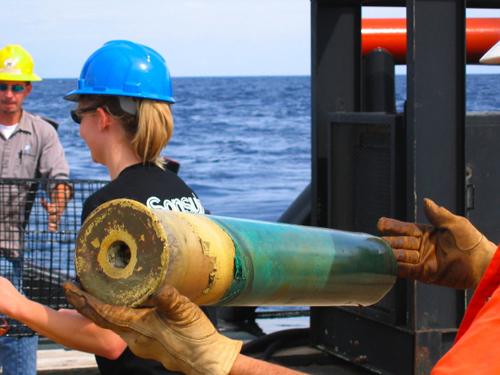
105 mm shell casing from the U-507 found next to the shipwreck of the Alcoa Puritan. -courtesy PAST Foundation

Another U-boat that achieved notoriety in the Gulf of Mexico was the U-506 commanded by Knight’s Cross winner Erich Würdemann. U-506 attacked eight ships in the Gulf of Mexico from May 10 to May 20, 1942. Four of these ships were badly damaged while the other four were sunk, including the tanker Gulfpenn. The Gulfpenn was transporting four million gallons of gasoline from Port Arthur, Texas to Philadelphia, Pennsylvania when it was hit by a torpedo from the U-506 off of Louisiana. The Gulfpenn exploded and sank quickly after being torpedoed; thirteen crew members perished.

Oblt. Hans-Günther Kuhlmann commanded the U-166 which sank four ships off of Louisiana from July 11 to July 30, 1942. One of the ships sank was the passenger ship Robert E. Lee, which was carrying 407 passengers and crew; 25 lost their lives in the sinking.

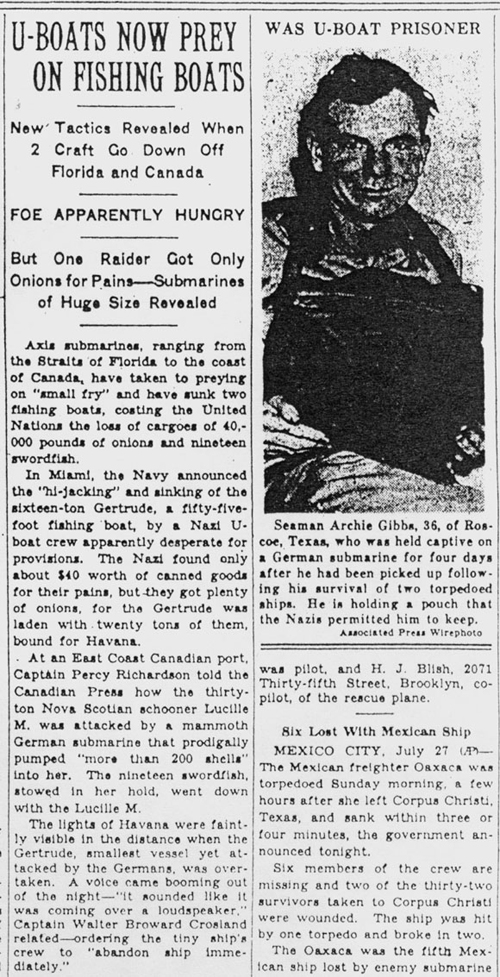
U-126 commanded by Knight’s Cross winner Ernst Bauer sank several ships off of Cuba, including the merchant ship Kahuku. A sailor from the Kahuku, Archie Gibbs of Roscoe, Texas was held captive on the U-126 for four days before being released in an inflatable rubber boat within sight of land.

U-156 was sent to the Caribbean on a secret mission to attack the oil refinery and tank farm on the island of Aruba. The attack failed when the first shot from the 105mm deck gun prematurely exploded in the barrel, damaging it. This happened because the protective cap at the end of the barrel was not removed before the gun was fired, causing the end of the barrel to burst. Working at top speed, Captain Werner Hartenstein and his crew managed to cut off the damaged part of the barrel, but the alarm had been sounded in Aruba and the attack was called off. This freak accident saved what was then the world’s largest oil refinery from a surprise attack. Hartenstein later sank two cargo ships off of Cuba with his sawed-off deck gun.

After an alarming number of ships were sunk by U-Boats off of the Gulf Coast, a panic set in and rumors were rampant. The most famous of these rumors concerned U-boat crewmen coming ashore to watch movies in New Orleans or going shopping in Houston. None of these rumors were ever verified as being true.

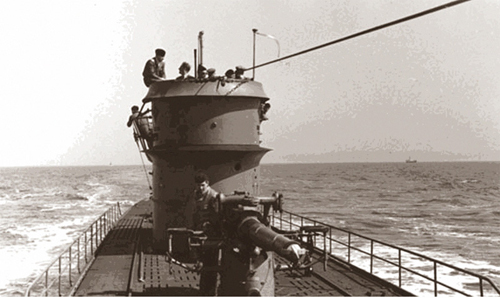
German Submarine U-166 underway showing the 105mm deck gun with protective cap. -courtesy the PAST Foundation

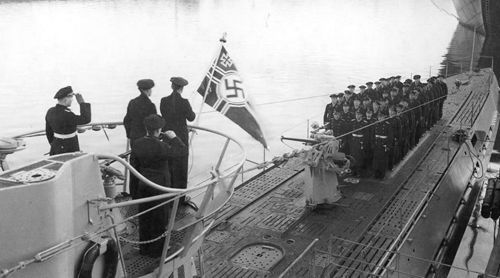
Picture taken in port of the German Submarine U-171 which sank the Oaxaca eleven miles from Port O’Connor during World War II.

By the end of World War II, fifty-six ships were sunk with an additional fourteen ships damaged by German U-boats in the Gulf of Mexico. A total of twenty-four U-boats were used in these operations with the U-166 being the only U-boat lost. For many years U-166 was thought to have been sunk by a U.S. Coast Guard aircraft on August 1, 1942, but was actually sunk two days earlier by depth charges from the U.S. Navy sub-chaser, PC-556. The Coast Guard aircraft may have spotted and attacked the U-171 instead, inflicting no damage. The mystery of the U-166 was solved in 2001 when it was found off of Louisiana in 5,000 feet of water one mile from the shipwreck of its last victim, the passenger ship Robert E. Lee.

Of the fifty-four type IX-C U-boats built, only the U-505 survived World War II. U-505 was captured by the U.S. Navy in 1944 and is now on display in Chicago, Illinois at the Museum of Science and Industry.

The wreck of the Oaxaca lies eight miles offshore from the Gulf Jetties, resting in 60-65 feet of water. One of the masts of the ship stuck out of the water until sometime in 1945 when the Coast Guard removed it and set off explosives in the superstructure so the wreck wouldn’t be a hazard to navigation. During the late 1990’s, students with the Texas A&M Nautical Archaeology program conducted dives on the wreck. In 2004 the Texas Parks and Wildlife “Ships to Reefs” Program investigated the Oaxaca shipwreck. Side scan sonar and sub-bottom profiler investigations show the ship is sitting upright in two pieces on the sea floor with parts of the wreckage only forty feet from the surface. Locally the wreck is mostly known as the “rubber ship” due to the rubber bales that occasionally wash ashore, which was part of the Oaxaca’s cargo.

According to the Texas Parks and Wildlife Ships to Reefs Program the main section of the wreck lies at the following coordinates: Lat- 28 22’ 27.027 & Long- 96 11’ 09.535 (degrees, minutes, seconds). These coordinates need to be converted to degrees, decimal minutes to be used with most GPS navigational devices.

Many thanks for assistance with this article go to Henry Wolff Jr. of Victoria, Steve Hoyt formerly with the Texas Historical Commission, Dale Shively with the Texas Parks & Wildlife Ships to Reefs Program, the U.S. Navy Historical Center, the PAST Foundation, and the late George Fred Rhodes of Port Lavaca.

Acing the Air Race Classic by Jasmine Gordon

Archived in the category: General Info
Posted by Joyce Rhyne on 12 Jul 12 - 0 Comments

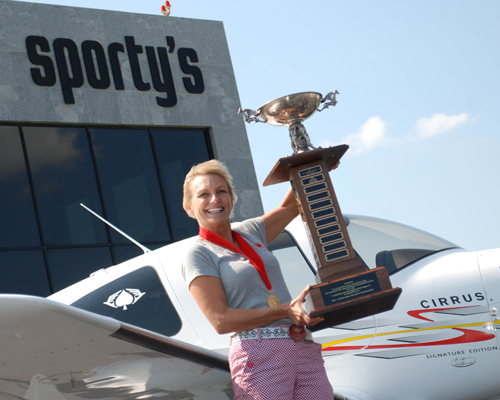
Diana Stanger proudly showing off the Racing Aces’ trophy. Diana is the airport manager at Calhoun Air Center, Calhoun County Airport in Port Lavaca. She also owns and operates the fixed base operator in Victoria, Texas. She learned to fly in 1994 and has over 3700 hours of flight time in rotorcraft and fixed wing.

As we traveled home, southwest along the United States at 182 knots and an altitude of 10,000 feet, I could barely take in the series of events that had occurred the weeks prior.

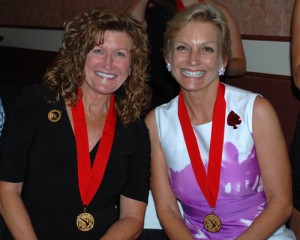
I am proud to write the following, The Racing Aces, Dianna Stanger and Victoria Holt were announced the 36th Annual Air Race Classic (ARC) Champions on Sunday, June 24th.

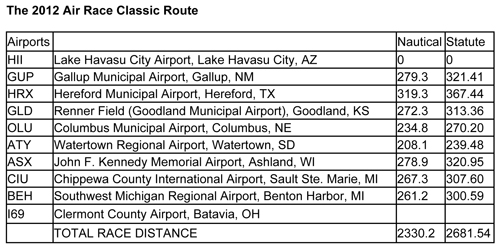
The race concluded on Friday, June 23rd at the terminus in Clermont County Airport in Batavia, Ohio. The four-day race covered 2,862 statute-miles, eight states and nine stops. The female pilots competed in last year’s race placing middle of the pack. Two and a half years in the making both are elated to take home the championship title.

The experience for me was absolutely surreal and I wonder if any other life event will be able to top this one. I arrived in Arizona the Sunday prior to the start of the race, June 19th. Quickly catching up with the Aces we prepared for the evening’s banquet. Although anxiousness coursed through the room that evening, it was a nice refresher. Guest speakers included the head of the Rio Colorado Chapter of the Ninety-Nine’s, Lake Havasu’s city manager, airport manager and a female F-16 fighter pilot. It was extremely empowering to be a part of this very special group. Top Gun references were a dime a dozen and one of the very most important goals of the ARC thrived – camaraderie.

“It will be another great adventure in my life and a sentimental journey,” Holt expressed. “The start of the race will have a special meaning because Lake Havasu City was my childhood home and I have so many fond memories of family, friends, and days gone by.”

The following day, June 18th, we were all busy preparing for Tuesday’s ARC start. The Aces attended an update and weather briefing, no doubt we were all a buzz with excitement. I worked non-stop updating the website, social media and contacting news crews. I was delighted when I was invited to take photos of the race start, Monday evening I could barely sleep with anticipation.

The next morning we woke early and departed for Lake Havasu City Airport. I snapped photos left and right as the team settled into the plane and waited for the race start. We said our good-byes and airport manager, Steve Johnstone drove me to the start of runway 32. Teams departed from the airport promptly at 8:00 am (MST) in order of classic racer number. The planes taxied in groups of five towards the 8,000 foot runway. A total of forty-nine planes departed in approximately forty-five minutes. Airport manager, Steve Johnston commented, “This is the opportunity of a lifetime for us. We had a great turn out to see the pilots off!”

I captured over 1,700 photos of the planes taxiing and taking off, after the last plane departed, I stood in awe and a bit emotional. I had just witnessed over a hundred female pilots begin a competition of which Amelia Earhart was apart of over eighty years prior. I quickly set up in the business center of my hotel and tracked the team on the Spot Tracker, a GPS device which the team was carrying in the plane. The device drops cookies every ten minutes allowing anyone to view their journey online via Google Maps. The accuracy of the GPS unit was mesmerizing.

The team started out strong, flying five legs of the race in the first day and covering 1,482 statute-miles and over half the race route. They flew from Lake Havasu City Airport, Lake Havasu City, Arizona to Gallup Municipal Airport, Gallup, New Mexico; Hereford Municipal Airport, Hereford, Texas; Renner Field (Goodland Municipal Airport), Goodland, Kansas; Columbus Municipal Airport, Columbus, Nebraska; settling in Watertown Regional Airport, Watertown, South Dakota.

The day was long, but that evening we still could not sleep. The temperature that day reached 120 degrees in Arizona and it was a definite factor. Fatigue and heat exhaustion troubled some teams. The following day all teams were grounded due to eastern weather systems. The Aces took advantage of the time, recollected themselves and planned for the next day.

The pilots departed from South Dakota on the third day of the ARC covering 629 statute-miles. They flew to John F. Kennedy Memorial Airport, Ashland, Wisconsin; and Chippewa County International Airport, Sault Ste. Marie, Michigan. It was a meaningful stop for Dianna as she grew up in Michigan.

The Racing Aces departed from Chippewa County International Airport on the morning of the 22nd, the fourth day of the race, later than a handful of racers but the move was strategic and beneficial. These are instances where the race can get the best of the pilots, one second-guess and it could cause a significant difference in placement.

I waited impatiently, refreshing the Spot Tracker web page what seemed like a million times. I had flown to the terminus in Ohio the day prior and waited nervously, I called the fixed base operator in Michigan several times asking if Classic Racer #24 was on the departure list. Debbie, the receptionist was very kind (yes, we were now on a first name basis), she kept me updated on their status. Finally I saw the Spot Tracker begin to transmit signal and I packed up my equipment and headed to Clermont County Airport, home of Sporty’s Pilot Shop, the mecca of pilot supplies and accessories!

I arrived at Sporty’s Pilot Shop and before I even reached the front door I was greeted by a friendly gentleman, I explained my purpose and he escorted me mid-field of runway 4. It was the perfect location to capture the teams as they passed low over the field, circled to land, and taxied in. The airport has a sound system set up outside so that people are able to hear all of the radio calls echo loudly on the field. I also notice driving in that they have a viewing area at the end of the runway where people may watch the planes arrive and depart.

The pilots, Victoria Holt and Dianna Stanger, flew the last two legs in a matter of hours. I stood by the runway waiting, waiting – then I waited some more until finally I heard a familiar voice over the sound system. “Classic Racer #24, five miles out.” Dianna’s voice is very distinct on the radio; I prepared for their flyby quickly texting the crew back home informing them the time had come and updated the Ace’s Facebook page. Once the Aces crossed the finish line they were greeted by a friendly Sporty’s staff, the team checked into the terminus and only then did it finally sink in – the friendly staff member that had been so kind was in fact the president of Sporty’s Pilot Shop, Michael Wolf! I was delighted to hear the team say they saw me before anyone else! The spot proved to have been perfect!
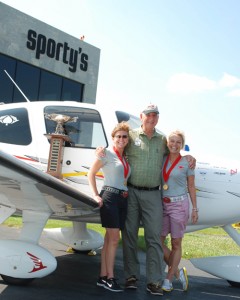
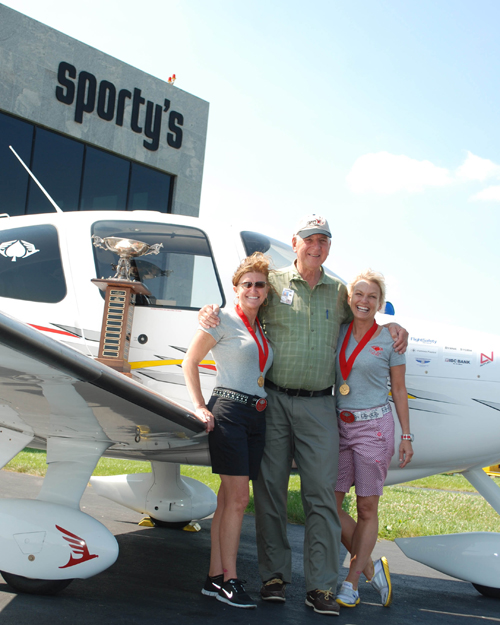
Victoria Holt (L), Hal Shevers, founder of Sporty’s Pilot Shop, and Dianna Stanger (R) celebrating the Racing Aces win.

We then waited for the banquet on Sunday to learn the final results of the 36th Annual ARC. The team was announced the champions on the evening of Sunday, June 25th and the first to win in a Cirrus SR 22 Special Edition.

On behalf of the Aces, I would like to thank everyone that has supported the team, followed up on Facebook and the website. The Racing Aces look forward to continuing to promote general aviation to girls of all ages. Most importantly, awarding scholarships in Calhoun County in 2013 with the proceeds from this year’s race. The team’s goal has snowballed into something much larger than any one of us could have anticipated as we have now teamed up with powerhouses across the nation which are also striving to make a difference in the general aviation community. The Aces promoted aviation all along the race route and made headlines in Arizona, South Dakota and Ohio.

The female pilots are proud to follow the footsteps of past competitors and aviatrixes such as Ruth Elder and Blanche Noyes. They helped pave the wave for the Aces and in turn, they hope to do the same for other female pilots.

During a telephone interview I was delighted to find an aspiring pilot. “I did not discover my interest in flying until I was in college, but once I did, I couldn’t get the thought out of my head. I took one lesson and absolutely loved it,” said Hailey Maiden of the Temple Daily Telegram. “As for female pilots, I never realized how incredibly male-dominated of a profession it is and I can’t understand why. Some of the most inspiring stories have come from female pilots such as the Racing Aces, seeing what they can do definitely inspires me to be just as great. I think any woman who may be interested in flying to look to them as inspiration.” Victoria and Hailey have now become acquaintances, it’s wonderful to see that the Racing Ace’s mission is making a difference.
Dianna and Victoria would like to personally thank the 2012 sponsors; AvFuel, Byrne & Storm, P.C., Federman, Lally & Remis LLC, IBC Bank, Eurocopter, Flight Safety, Formosa and Ladd Gardner Insurance.

Words can’t describe how much this journey has meant to me – seeing my photos grace sites and publications such as Sporty’s Pilot Shop, Aircraft Owners and Pilots Association and Experimental Aircraft Association have taken me to new heights. I am glad to be able to share this journey with the Dolphin Talk readers and hope that females out there are able to benefit from it. You are never too young or old to discover a passion for aviation – let your dreams take flight. If you wish to view the ARC photos, read an in-depth update on the Racing Ace’s journey visit http://theracingaces.com. Till next time, blue skies!
Island Life… by Clint Bennetsen

Archived in the category: Featured Writers, General Info, Island Life
Posted by Joyce Rhyne on 12 Jul 12 - 0 Comments

Gotta Love The Small Town Life

Greetings from the island everyone. Hope all of you are doing well and enjoyed your Fourth of July weekend. Barnacle and I stayed on the island, having no desire to venture to the mainland and endure the chaos that is. We watched the fireworks display Saturday night from across the bay and certainly enjoyed the spectacular display. I’ve heard mention that the annual fireworks show in the small town of Port O’Connor outshines the displays of much larger towns. Kudos to those shouldering the responsibility for this annual community treat.

You know there is something to be said, and admired, about small town ways and the bonds that connect residents as more of an extended family environment. Growing up in Seadrift, the small town ambience of togetherness was instilled from the get-go in all of us. There are a group of my first grade friends and I, forty four years later, that still stay in touch and get together whenever we can. Some of them are even taking a cruise to Alaska together this summer. . . I think that maybe I hate them now.

In times of need, small town communities come together in the form of benefits, bake sales and donations. To this day, my mother and sister, along with the rest of the local ladies, always make a food dish to drop off at the home of funeral families, and monetary assistance is always given to that family to help out. And for some odd reason, small town deaths have the tendency to occur three at a time in close proximity of one another. Go figure.

Seadrift and Port O’Connor are two of the greatest small town coastal communities that you will ever drive through, and there won’t be a single traffic light to impede your way. Businesses giving credit until you can pay later, of which I hadn’t even heard of since Cruz Gonzales owned Pic Pac many years ago. Postmasters putting stamps on your letters for you after you forgot to do so (and not even calling you an idiot for it, which I deserved), produce managers saving old vegetables for your chickens, newspaper editors giving you extra time to submit your article due to old-age acts of forgetfulness. The small town deeds of kindness, which aren’t even given a second thought, go on and on.

I’m very happy to have spent my childhood, and now my later years, in a small town atmosphere; I truly feel that I am a better person because of it. There appears to be a bit of truth in the theory that the road often leads back to your roots, and not a traffic light one to block that road.

Well, the new chickens started laying eggs a few weeks ago, thank goodness. I’m now seeing a return on the hundreds of pounds of chicken feed they have been devouring; forty six chickens eat a lot of feed. I’m down to one rooster, the others having met their maker, and if this remaining one continues to crow at 4:00 a.m., I’ll be down to NO roosters.

The watermelon and cantaloupes are doing great. The recent rains we’ve been having sure did kick start them in growing. And I’m continuing to bring seaweed from the beach and compost it down along with chicken manure, coffee grounds and crushed egg shells to make a wonderful organic fertilizer to add to my garden soil.

I ran in this past Sunday to attend the 50th Mikush family reunion, my moms side, in Hallettsville. It was great seeing relatives that I hadn’t laid eyes on in years, especially my beautiful cousins, the Cejka girls and the Koerth girls. The older I get, even though I’m a hermit by nature, family becomes more special and I’ll take the time to spend quality time with them.

Well that’s it from the island for now, everyone take care and have a great day.

Untitled Document